Tatort
Residency Carlos Díaz
Residency 17–23 November 2025
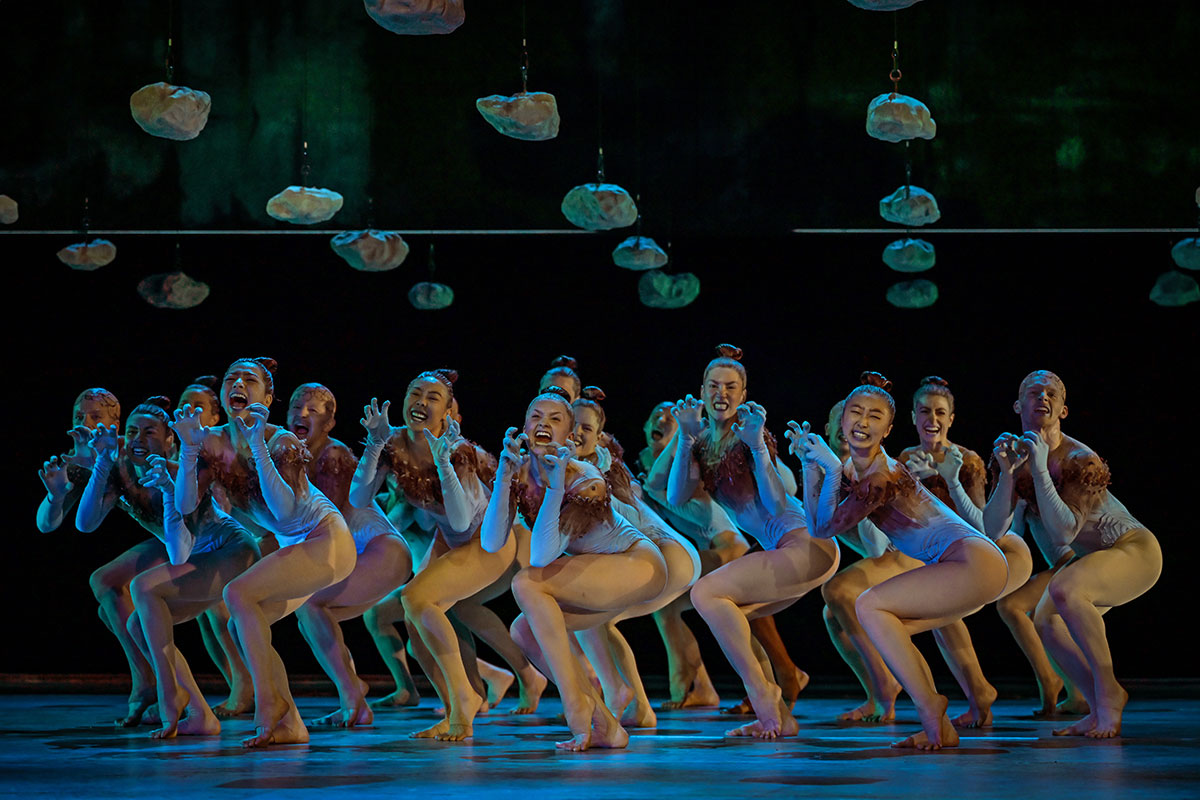
As part of the Pop-Up Residency at Staatstheater Darmstadt, choreographer Carlos Díaz dedicates a one-week artistic research phase to his new dance theatre piece Tatort (working title), scheduled to premiere from 18–20 June 2026 at Gallus Theater Frankfurt.
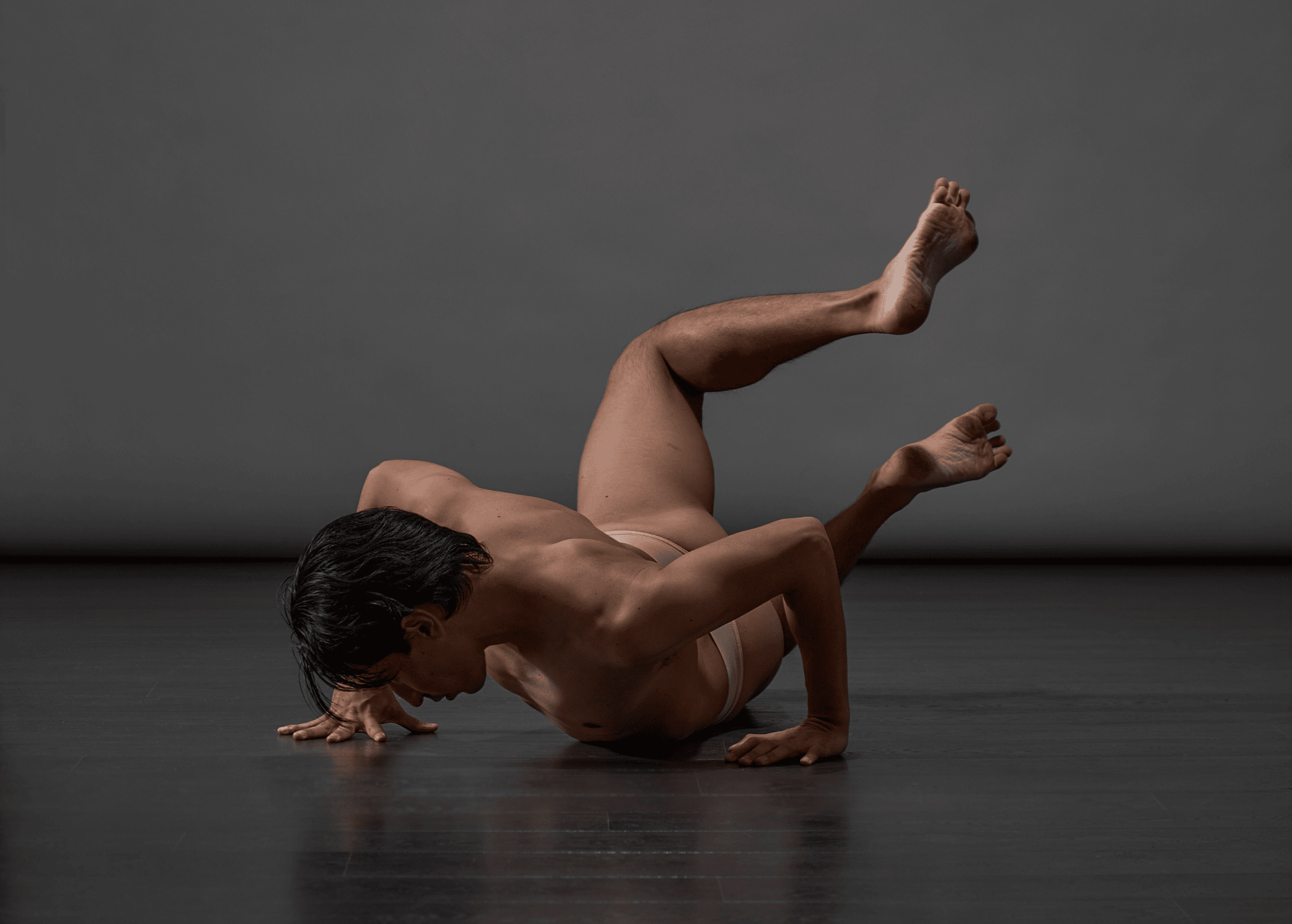
The residency functions as a laboratory to explore the physical and atmospheric foundations of the work—with a focus on movement experiments, sound design, and lighting. Together with one to two dancers, Díaz investigates how gesture, rhythm, and light can make the tension between violence and desire—central themes of Tatort—experientially tangible.
During the residency at Staatstheater Darmstadt, a new choreographic section was developed that deals with sadness, masculinity, and stoicism. Its point of departure is the phrase “boys don’t cry,” understood as a cultural structure that fosters emotional suppression and shapes particular conceptions of masculinity. From this premise, the choreography creates a poetic and physical fabric around notions of vulnerability, shyness, and emotional restraint.
The work revolves around a central question: Is the denial of one’s emotions a form of violence against oneself? And further: How are our emotional and sexual relationships shaped when, from early childhood, we are denied the right to tears, fragility, and the expression of pain?
This choreographic exploration is accompanied by the ballad ¿Por Qué Me Haces Llorar? (“Why Do You Make Me Cry?”) by the iconic Mexican singer Juan Gabriel—a key figure of Latin American pop culture and a reference point of queer sensibility. His voice, full of drama and emotional intensity, forms a poetic counterpoint to the command of emotional hardness and opens a performative space in which crying is not seen as weakness but as an act of resistance.
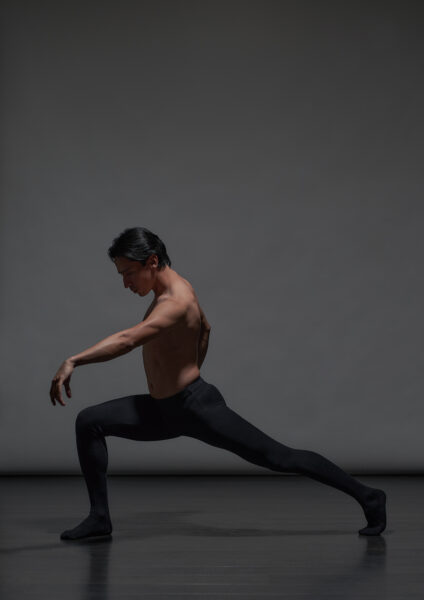
Carlos Díaz Torres is a Peruvian dancer and choreographer based in Frankfurt since 2021, where he works as a freelance artist. He trained in classical ballet at the Ellison Ballet School in New York and danced with the National Ballet of Peru in Lima from 2015 to 2020.
Since moving to Frankfurt, he has performed as a guest dancer at Oper Frankfurt, Hessisches Staatstheater Wiesbaden, and Landestheater Detmold. In November 2024, he realized his first full-length dance theatre production, It’s Quiet in Hell, at Gallus Theater Frankfurt, supported by the Cultural Office of the City of Frankfurt am Main and the Hessian Ministry of Science and the Arts. The work received a highly positive review by Marcus Hladek in the Frankfurter Rundschau.
He has also presented his own choreographies at the festival Freier Tanz im Delta XIII and XIV in Mannheim, at the DanceNexus Festival in Wiesbaden, and in performances at Galerie Monica Ruppert. In 2022, Carlos completed a choreography residency at ID_Tanzhaus Rhein-Main with his project The Vallejo Readings and presented another work at the Sommerwerft Festival.
Alongside his artistic practice, he completed a Bachelor’s degree in Translation and Interpreting at Valencia International University (Spain). His training includes not only ballet but also Peruvian folklore, flamenco, tango, contemporary dance, and jazz dance. In 2016, he participated in a stage design course with César Guerra in Lima, and in 2017 he began actor training at the Taller Estudio de Formación Actoral with Ramón García.
His artistic work combines ballet, contemporary dance, and performative elements with intercultural influences.
Currently there are no upcoming performances of this Program.