Digital program booklet “Nachtträume”
“Night Dreams” by Marcos Morau was the ballet event of the year in Zurich in 2022. The Spanish star choreographer’s work is both a choreographic panorama and a profound Gesamtkunstwerk. It presents a hauntingly beautiful dream world in which power, powerlessness, and blind obedience collide: a 90-minute, emotionally charged journey through the darkness and hopes of our present—a mirror reflecting vanity, envy, greed, and social Darwinism.
Drawing on Kurt Jooss’s iconic 1932 anti-war dance drama “The Green Table”, Morau interweaves historical references with quotations from masterpieces by Maurice Béjart, including “Boléro” and “The Rite of Spring” (Le Sacre du printemps). In this revival by the Hessiches Staatsballett, the stage becomes a labyrinth of round tables, chairs, red sun-like spheres, and intertwining bodies, where destruction and seduction, menace and sensuality exist in close proximity.
Dramaturg’s note
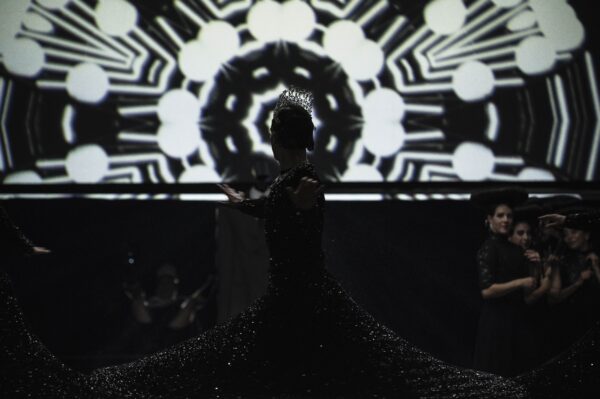
Love me!
by Lucas Herrmann
What kind of world is it that Marcos Morau takes us into with Nachtträume? A world of celebration and seduction, elegance and excess — and at the same time a world in which power, powerlessness and blind allegiance become entangled with one another.
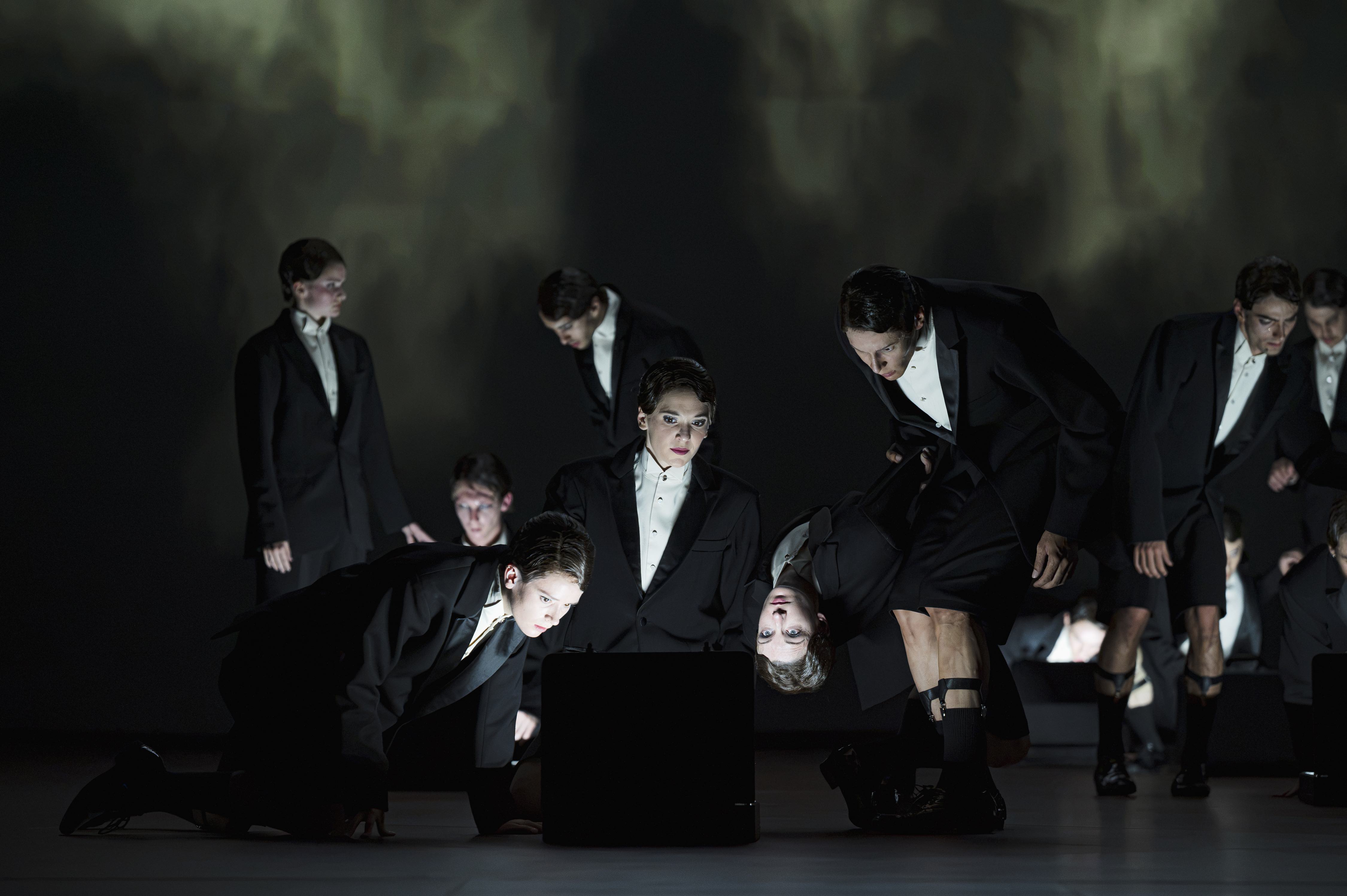
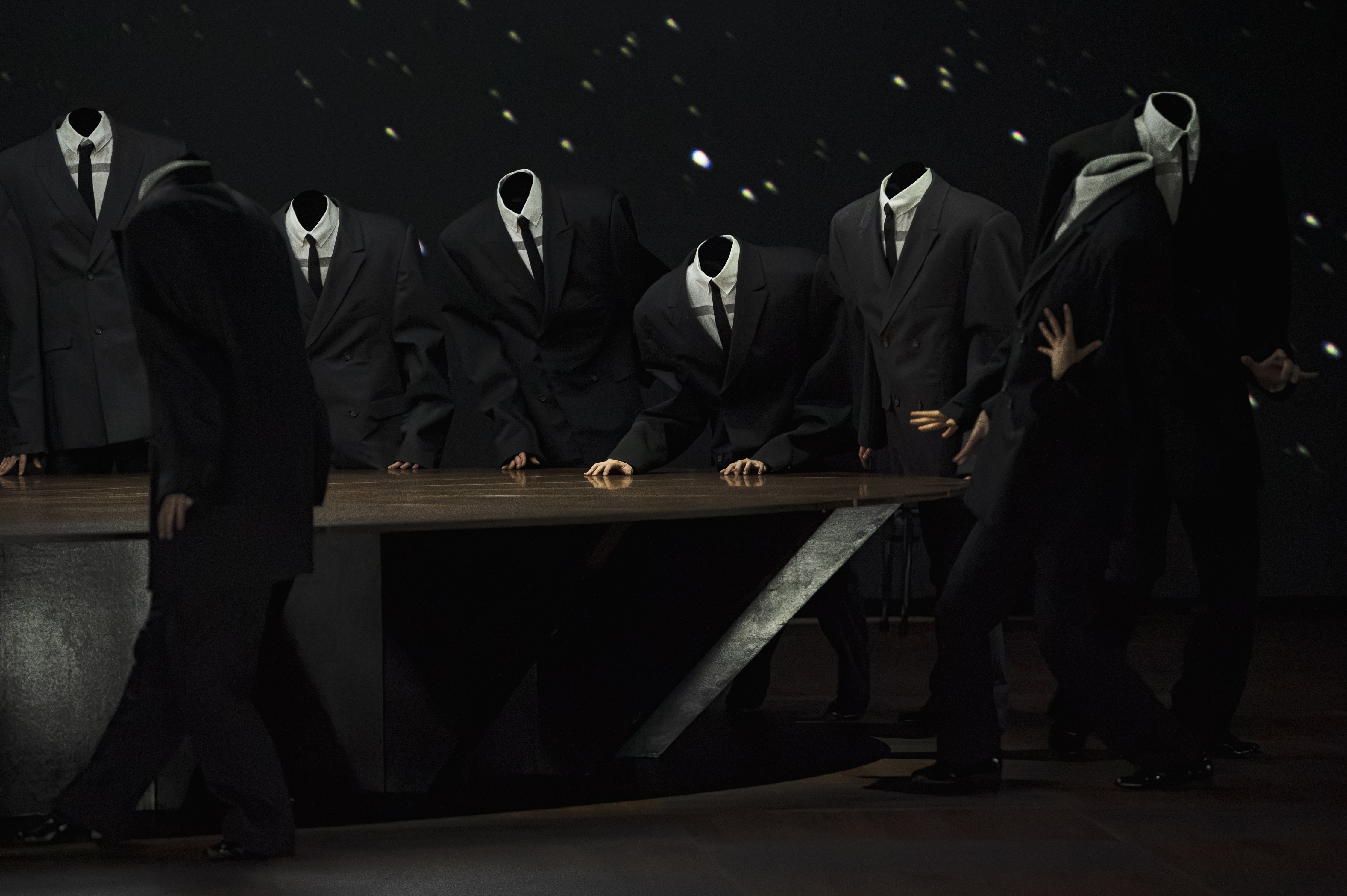
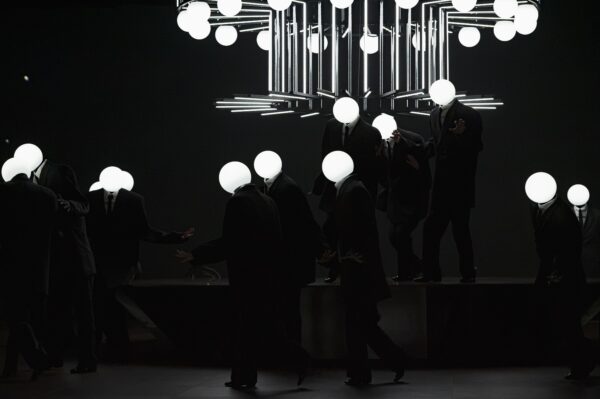
A large round table dominates the stage, with an oversized chandelier floating above it. Bodies form groups, then dissolve again, becoming mass, machine and ornament. Everything seems familiar and yet eerily displaced. There is no linear story. Instead, a panopticon of images, situations and states emerges: a dream logic in which historical memories, political realities and grotesque fantasy merge into one another.
Nachtträume, created for Ballett Zürich in 2022 and now being revived in a new production with Hessisches Staatsballett, is far more than a choreographic work. Morau fundamentally conceives of dance as part of a broader theatrical cosmos. Movement, space, light, costume, music, video and language are equal elements of a shared visual language. Nachtträume is dance, theatre, concert, installation and visual theatre all at once — an interdisciplinary Gesamtkunstwerk, a total work of art.
Its point of departure is Kurt Jooss’s The Green Table, the anti-war ballet premiered in 1932 that exposed mechanisms of political power through expressionist imagery. Morau, too, creates a society of rulers, followers and victims, though without assigning these roles unequivocally. Society appears as a deformed organism. Individuals become an anonymous mass; they obey, imitate, compete, desire and destroy. The question, therefore, is less who “the bad guys” are than: How does power work — and why do we submit to it?
The political dimension of Nachtträume emerges precisely from Morau’s refusal to illustrate any specific situation. His images can be read in relation to authoritarian systems as well as social hierarchies, economic dependencies, conformity, or the cult of success and wealth. Vanity, greed and social Darwinism are not explained but made physically tangible. The group can offer protection while simultaneously erasing the individual. Those who belong are safer; those who break away become visible.
The large round table thus becomes a model of society: banquet table, negotiating arena, centre of power or game board. It is a place where people act, work and struggle for dominance. Bodies become mechanised; movements seem like components of clockwork. People dressed alike appear interchangeable. Together, they form a structure that sustains itself. Morau is interested in that moment when many bodies become a system.
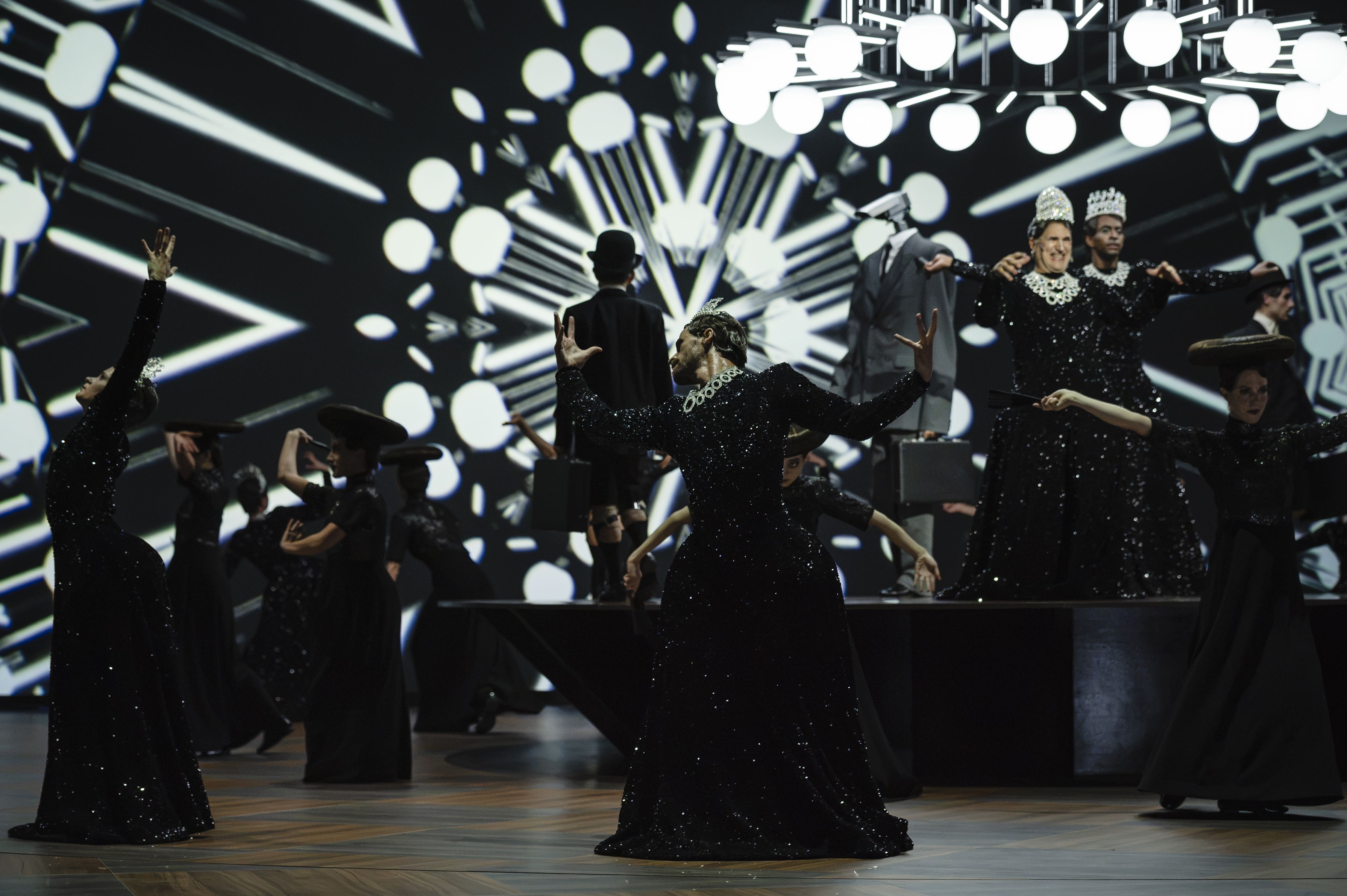
Yet the critique does not unfold through realism. Morau’s stage is artificial, stylised and heightened. The disturbing appears in glittering costumes, beneath a magnificent chandelier, with choreographic precision and, at times, even comic moments. Beauty and violence exist side by side. That is precisely what makes the images so unsettling: the seductive and the threatening are not opposites, but two sides of the same spectacle.
The movement language follows the same principle. Angular, precise and highly artificial movements create a visual ornament in which choreographic virtuosity can simultaneously become a sign of control. Synchrony is beautiful — and uncanny. When many bodies respond at the same time, an overwhelming sense of order emerges, but so does the image of a society in which the individual loses their autonomy. The mass fascinates aesthetically because it creates order; politically, it becomes dangerous when order turns into obedience.
Music plays a central role: Clara Aguilar composed soundscapes specifically for Nachtträume, weaving them together with existing music to create a multilayered musical fabric. The broad horizon stretches from Franz Schubert and Sergei Rachmaninoff, and thus the late Romantic tradition, through the neoclassical sound worlds of BRND and Gustave Rudman to the shimmering world of cabaret, including Friedrich Hollaender and Kurt Weill. There are also echoes of film noir and the “funeral polka” of the Norwegian rock band Kaizers Orchestra. This diversity is far more than a collection of musical quotations. Aguilar connects and superimposes these different spheres, creating transitions, ruptures and new relationships. Music therefore does not merely accompany the dance; it becomes an independent dramaturgical force, repeatedly shifting our perception of what is happening on stage.
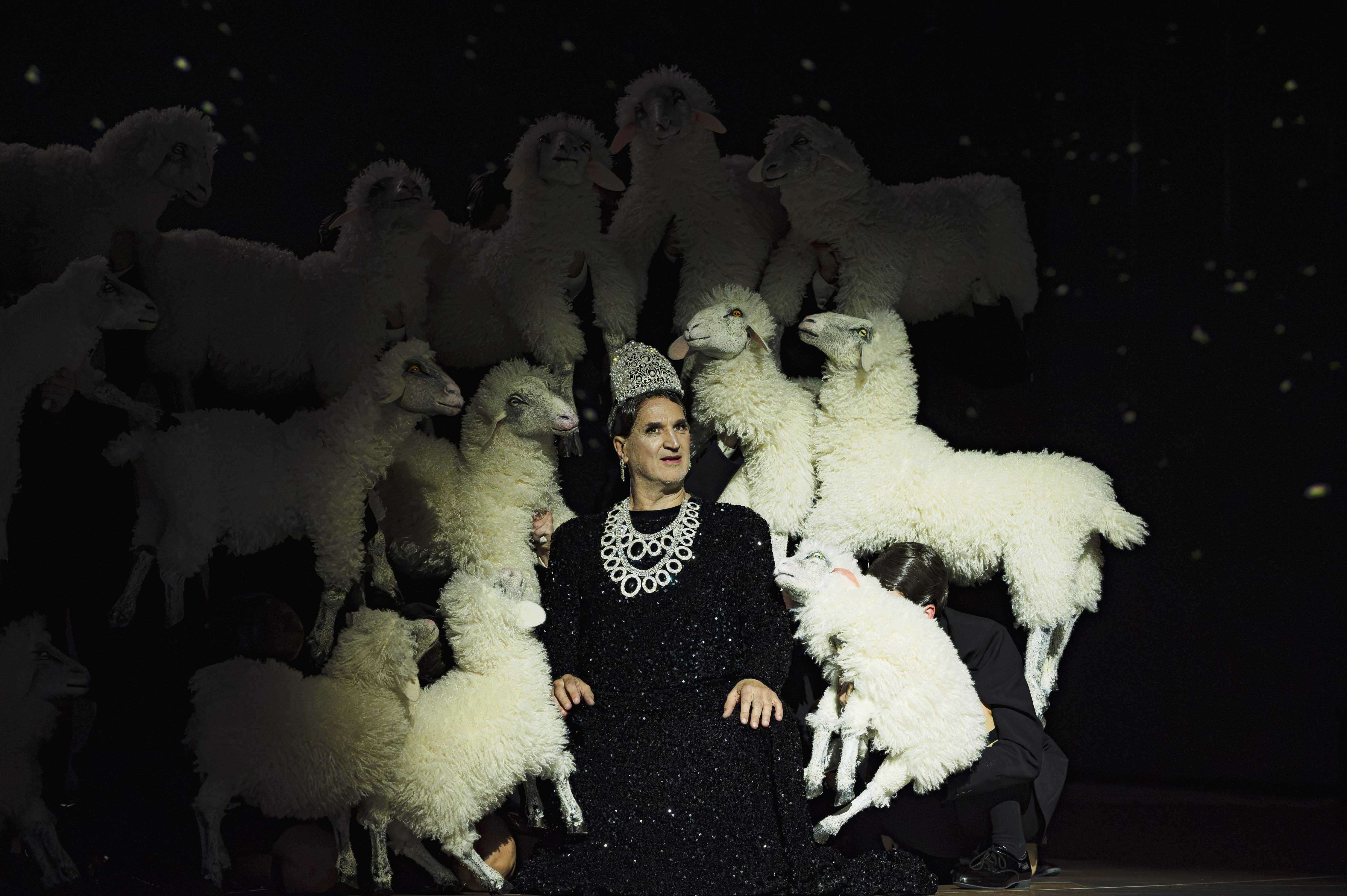
The interdisciplinary character of the piece becomes particularly apparent in the roles of the Queen, performed by Christian Klischat and Jorge Moro Argote. Their presence expands the choreographic world through language, character and immediate theatrical action. The “Queen” embodies the work’s contradictions, ranging from a darkly glamorous master of ceremonies to the personification of a perfidious system of power. In this way, the character crystallises the fundamental ambivalence of the piece: Nachtträume cannot be reduced to a political message. Its impact arises from the simultaneous presence of contradictory perceptions. An image may appear comic and, in the next moment, reveal its brutality. The music may seduce while the stage simultaneously speaks of control and power. Beauty is created — and at the same time our trust in it is shaken.
For Morau, then, the night is not a refuge from the political. It is the space in which what has been repressed can become visible. Here, the world can appear exaggerated, grotesque and dazzling all at once. Dream and reality begin to merge. We are left with the unsettling question of how much of this dream has already become our reality.
In conversation with Marcos Morau
In conversation with Marcos Morau
What do our dreams reveal about the society we live in?
During the day, society offers us structures, explanations, rules, so to speak. We learn how to behave within them and also how to make them seem reasonable. But dreams strip away that apparent logic. Things return distorted, exaggerated, displaced.
This was very important for Nachtträume. I was interested in the idea that perhaps our private nightmares are not entirely private. They contain the violence, anxiety, ambition and contradictions of the society that produces us. In that sense, the dream can become a kind of political X-ray. It does not explain society, but it reveals its symptoms. And perhaps that is why nightmares from very different historical periods can sometimes resemble one another so closely. Der grüne Tisch was created by Kurt Jooss in 1932, at a very specific political moment. Almost ninety years later, when I began working on Nachtträume, I was struck by how disturbingly familiar some of its questions still felt.
In times of political and social uncertainty, can the body on stage become a site of resistance? And what power can art have in this context?
For me, the body is inevitably political because it is the first territory on which society writes its rules. We learn how a body should behave, how it should work, desire, obey, produce, identify itself, occupy space. Long before politics becomes ideology, it has already become posture.
So yes, the stage can become a space of resistance. But I am wary of the idea that every artistic gesture has to become a declaration or a slogan. Resistance can also mean creating another possibility for the body, allowing it to escape the behaviour that has been assigned to it.
In Nachtträume, the bodies are constantly negotiating between individuality and the mass, between control and abandonment, between following and being followed. At times they appear almost anonymous, absorbed into a larger organism; at other moments, something individual insists on emerging.
I do not believe art directly changes political systems. A performance cannot stop a war. But art can disturb the structures through which we understand reality, and it can change people.
It can make something visible before we have the words to name it. It can interrupt certainty. It can introduce doubt where before there was obedience. And I think doubt can be a very powerful political space.
How important are ambiguity and the possibility of multiple interpretations in your artistic work?
They are fundamental. I am not interested in creating works that contain a secret message the audience has to decode correctly. Theatre is not an exam, is it? What interests me is constructing a very precise system of images, bodies, sounds, texts and relationships, and then allowing meaning to circulate between all those elements.
For me, ambiguity does not mean imprecision. Quite the opposite. Everything that happens on stage can be extremely precise while its meaning remains unstable. I often think that a work should function like a landscape. The artist constructs the geography, decides where the mountains are, where the darkness begins, where a road suddenly disappears. But the artist cannot decide what memories the person crossing that landscape carries with them, or which path they choose. I like the bird’s-eye view, haha.
In Nachtträume, this was especially important because dreams themselves function through association. Something appears familiar and immediately transforms into something else. A table can be a political institution, an altar, a workplace, or simply a table. If I explain everything, I eliminate the spectator. That is how I understand art.
What do you pay the most attention to when one of your pieces is being restaged with another company?
Of course, there is choreography, rhythm, spatiality, musicality, architecture. All of that has to be extraordinarily precise. But a work is not simply the sum of its steps.
I pay a great deal of attention to intention, to the quality of attention between the performers, to the relationship between the individual and the group, to the way a gesture attacks the space or withdraws from it, to where the gaze is directed, to the tension that exists before and after a movement. Sometimes someone can reproduce a movement perfectly and still be completely outside the work. That is why the difficult thing in a restaging is transmitting an invisible logic.
In Nachtträume, this is especially important because the ensemble functions almost like a society. The relationships between bodies, objects, rhythm and space construct the political architecture of the piece. If those relationships lose their tension, you can reproduce every step and still lose the work.
How much of the original intention should a restaging preserve, and how much can be changed to allow something new to emerge?
I do not think a restaging should become the preservation of a corpse. Fidelity is important, but first we have to decide what we want to be faithful to. There are changes compared with the Zürich version, but that is how I think about my work: as something in evolution, with different bodies, with adjustments, improvements, cuts and additions. A different company means different bodies. The theatre itself is different. And, perhaps most importantly, society is different too.
When Nachtträume premiered in 2022, we were looking at the world of that moment. When the piece returns today, the audience inevitably brings another world into the theatre. I find that fascinating.
What do you hope Nachtträume will evoke in the audience?
I would rather speak about what I hope it evokes than about what I hope the audience understands. Understanding is not always the most interesting relationship we can have with a work of art, is it?
I would like Nachtträume to produce a strange mixture of attraction and discomfort. For the spectator to recognise something and, at the same time, not be entirely sure what it is they recognise. The more disturbing question is why, at times, we desire precisely the structures that dominate us. Perhaps that is why the figure of the Queen became so important in the piece. Again and again, she asks to be loved. And suddenly power is no longer simply giving us orders; it is asking for our affection. That contradiction interests me enormously. Do we really want to change everything, or do we want to leave everything exactly as it is? I would like the audience to leave the theatre with images that refuse to disappear. Perhaps the best thing that could happen is that Nachtträume does not really end when the curtain comes.
Biography
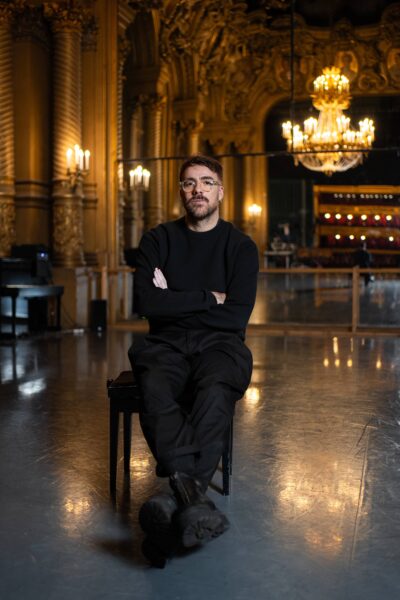
Marcos Morau is one of the most renowned choreographers and stage directors on the contemporary European scene. Born in Valencia in 1982, he trained in Barcelona and New York in disciplines including photography, movement, theatre and dramaturgy. His artistic language brings together dance, theatre, film, music and visual art, creating stage worlds with a highly distinctive identity.
As founder and artistic director of La Veronal, Morau has developed an oeuvre characterised by a powerful visual imagination, a precise physical language and an ongoing exploration of memory, identity, power, and the relationship between the individual and collective structures. His works often inhabit an ambivalent space between reality and dream, beauty and unease, the intimate and the political.
Works such as Siena, Sonoma and Opening Night established La Veronal’s international reputation. Morau’s works are now presented in more than 40 countries, including at the Paris Opera, Ballett Zürich, San Francisco Ballet and Bunkamura in Tokyo. He also has a longstanding relationship with Hessisches Staatsballett, which has commissioned, co-produced and presented several works by La Veronal. Morau is currently Associate Choreographer at Nederlands Dans Theater, Artist in Residence at Staatsballett Berlin, and Associate Artist at Triennale Milano Teatro.
Over the course of his career, the Spanish artist has received numerous awards. Among other distinctions, he is the youngest recipient of Spain’s National Dance Award; he was named Choreographer of the Year by the international dance magazine tanz in 2023 and 2025; and in 2023, he was appointed a Chevalier de l’Ordre des Arts et des Lettres by the French Ministry of Culture.
Through his deeply personal and immediately recognisable body of work, Morau has established himself as one of the most important international choreographic voices of his generation.
Credits
Choreography Marcos Morau
Set Design Max Glaenzel
Costume Design Silvia Delagneau
Music Clara Aguilar (with music by Franz Schubert, Sergei Rachmaninoff/Pierre-Yves Plat, Kaizers Orchestra, Friedrich Hollaender/Grausame Töchter, BFRND, Gustave Rudman, Kurt Weill)
Original Lighting Design Martin Gebhardt
Video Tieni Burkhalter
Dramaturgy Israel Solà, Michael Küster
Rehearsal Directors Marina Rodríguez, Fabio Calvisi, Shay Partush
Rehearsal Management Allison Brown, Luc Jacobs
Set and costumes courtesy of the Zurich Opera House.
Queen Christian Klischat, Jorge Moro Argote (alternating)
Trumpet Monika Harder, Andrea Braun, Christine Dobmeier (alternating)
Piano Waldemar Martynel
Dancers
Eden Beckerman, Mathilde Belin, Enzo Boffa, Carley Brooks, Edoardo Brovardi, Daniela Castro Hechavarría, Peng Chen, Gorka Duran Villar, Jackson Haywood, Zoe Jameson, Ramon John, Sayaka Kado, Masayoshi Katori, Bridget Lee, Pere Mauriz González, Milica Mučibabić, Naia Nieto Villanueva, Marcos Novais, Aurélie Patriarca, Elena Pineda Ortiz, Alessio Pirrone, Anthony Michael Pucci, Marie Ramet, Julian Sanchez, Sofie Vervaecke, Shu Ya Wang, Luke Watson, Benjamin Wilson