Digital program booklet “Become Ocean”
Adams’ orchestral masterpiece can be read as an allegory of the climate crisis, while at the same time offering a powerful meditation on depth, turbulence, uncanny silence, and ultimate calm.
For LEE\VAKULYA, the work also expresses the beauty of life’s circularity. They are drawn to nature’s graceful balance—the force that gives life and, with its immense power, can also take it away—ultimately returning us to our origins.
Dance and music oscillate between harmony and dissonance, between the gentle, flowing delicacy of water and the intense, rock-splitting tension of ice.
Dramaturg’s note
A Sensory Immersion
“Listening to it, we become ocean.”
This quote comes from the mesostic poem Many Happy Returns by the composer John Cage, written in the late 1970s. Cage dedicated it to his friend and colleague Lou Harrison and wrote about his music: “Listening to it, we ourselves would become an ocean.” This idea fascinated John Luther Adams, Harrison’s student, so deeply that he chose it as the title for one of his most significant orchestral works: Become Ocean, completed in 2013. The composition was commissioned by the Seattle Symphony Orchestra under the direction of Ludovic Morlot and is inspired by the vastness and dynamics of the sea. Its wave-like, flowing structures reflect both the gentle calm and the unstoppable force of nature.
John Luther Adams was born in Mississippi in 1953. Nature shaped him from an early age, and his move to Alaska in the 1970s strengthened this connection. The landscape of the Pacific Northwest—its light, vastness, and climate—is reflected in Adams’s musical language. This language is characterized by a combination of minimal music, subtle textures, slow-moving harmonies, and spatial sound design. Adams draws his strongest influences from the American postwar avant-garde, including composers such as John Cage and Morton Feldman. Like them, he is particularly interested in fluidity—the merging of sound, space, and environment. Become Ocean creates an immersive experience that allows the audience to sink into the vastness of the sea. For this composition, Adams received the 2014 Pulitzer Prize for Music as well as a Grammy Award in the composition category.
But Adams’s music is more than an aesthetic experience. It addresses the deeper connection between humanity and nature. In the notes to the score of Become Ocean, Adams writes: “Life on this earth emerged from the sea. As the polar ice melts and sea levels rise, we humans face the prospect that we may literally become ocean again.” The epoch-making piece of music can therefore be read as a meditation on the climate crisis—on depth, turbulence, stillness, and ultimate calm.
From this atmospherically dense soundscape, the choreographic duo LEE\VAKULYA develop a new creation of the same name for the Hessisches Staatsballett. The two choreographers are drawn to the graceful balance of nature, which gives life and, with its immense power, can also take it away again. Their choreography translates Adams’s musical structure into a comprehensive composition of body, technology, and space.
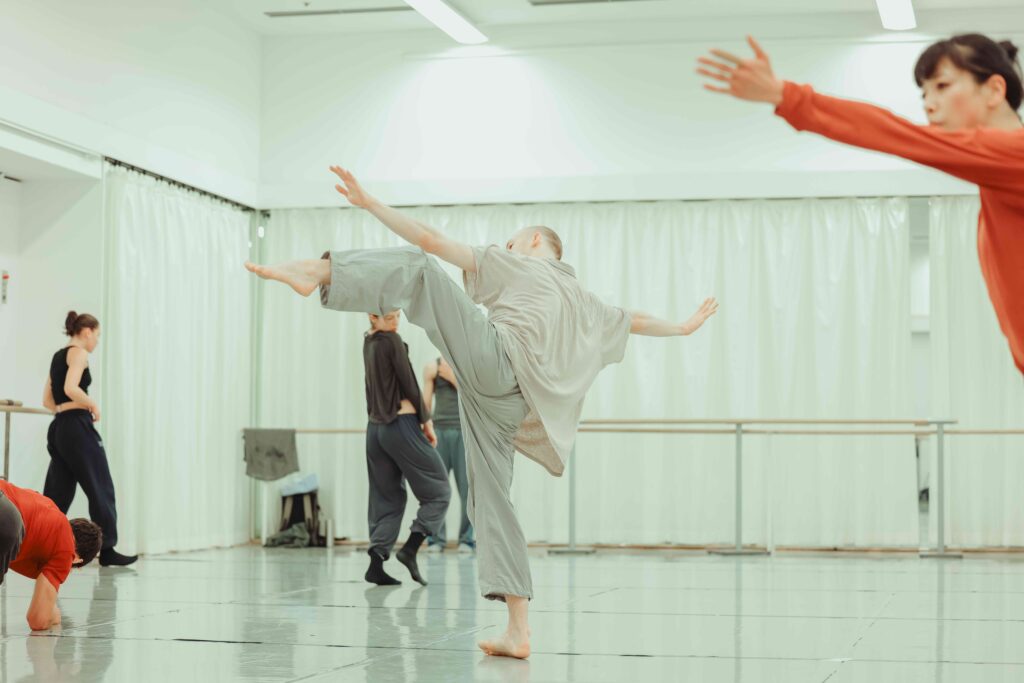
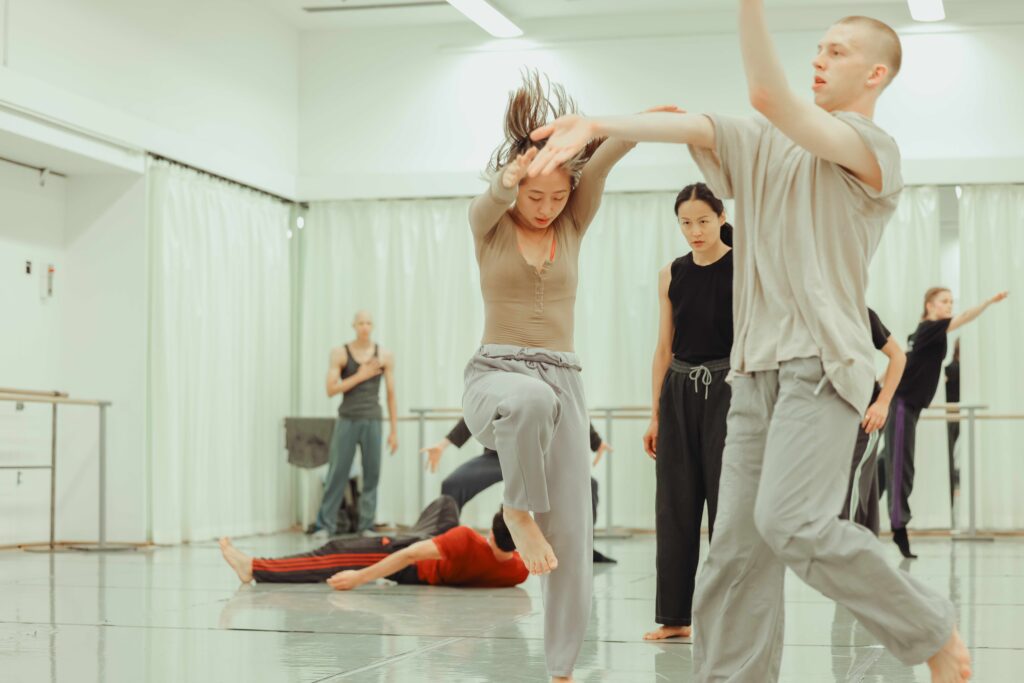
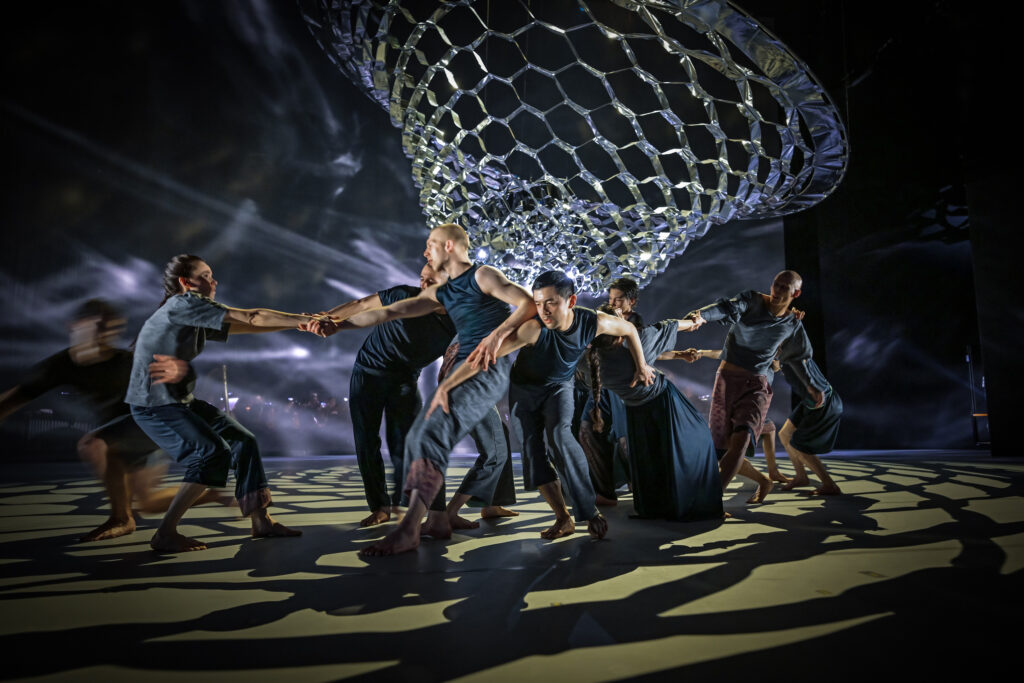
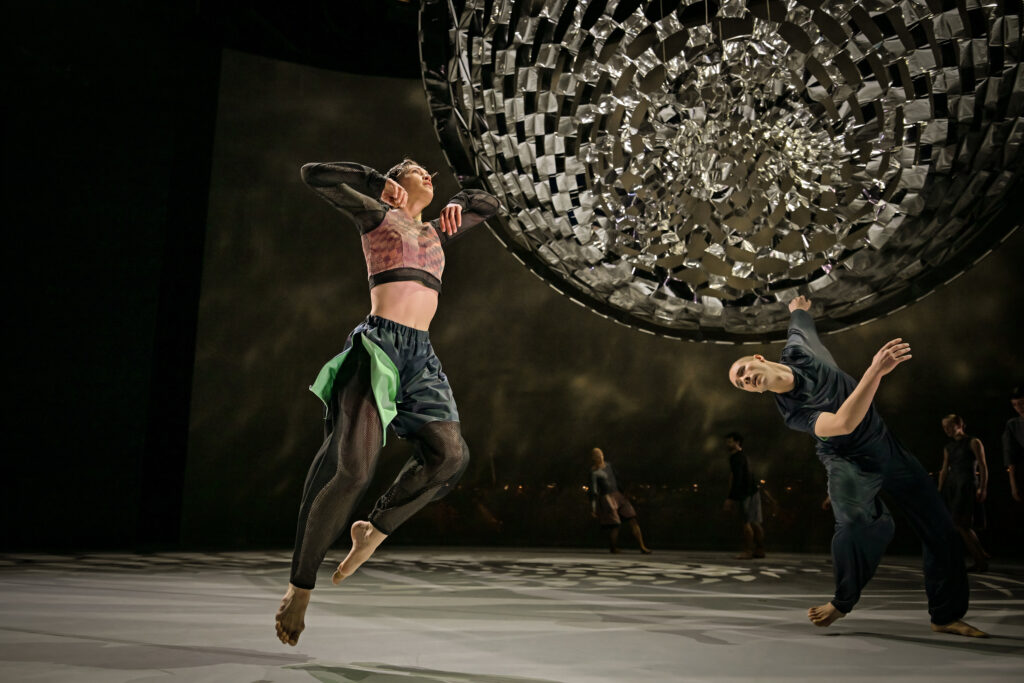
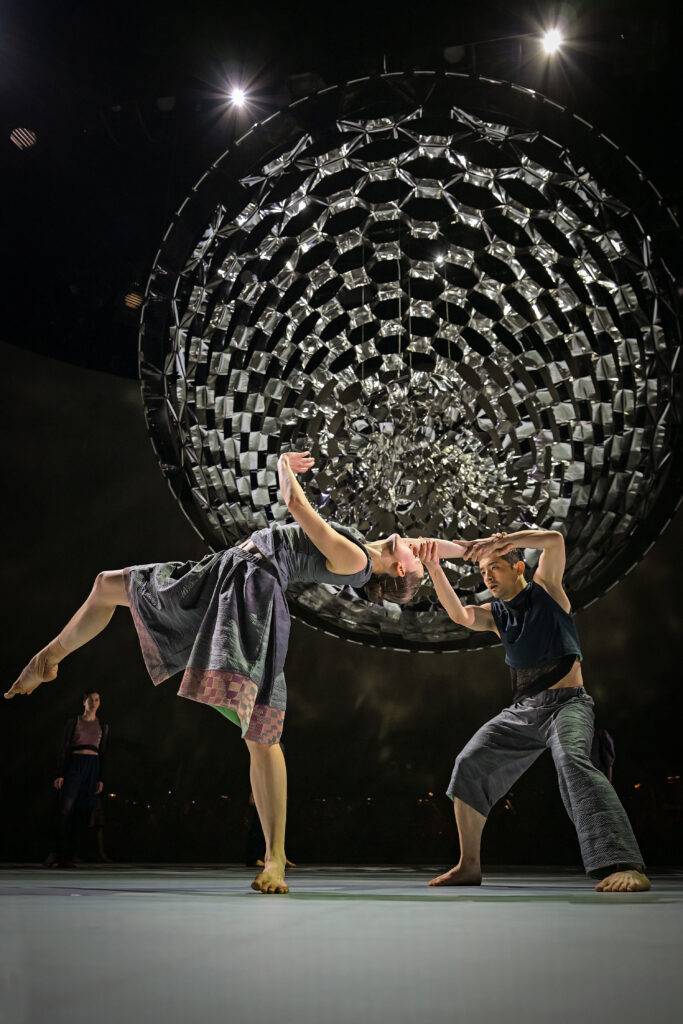
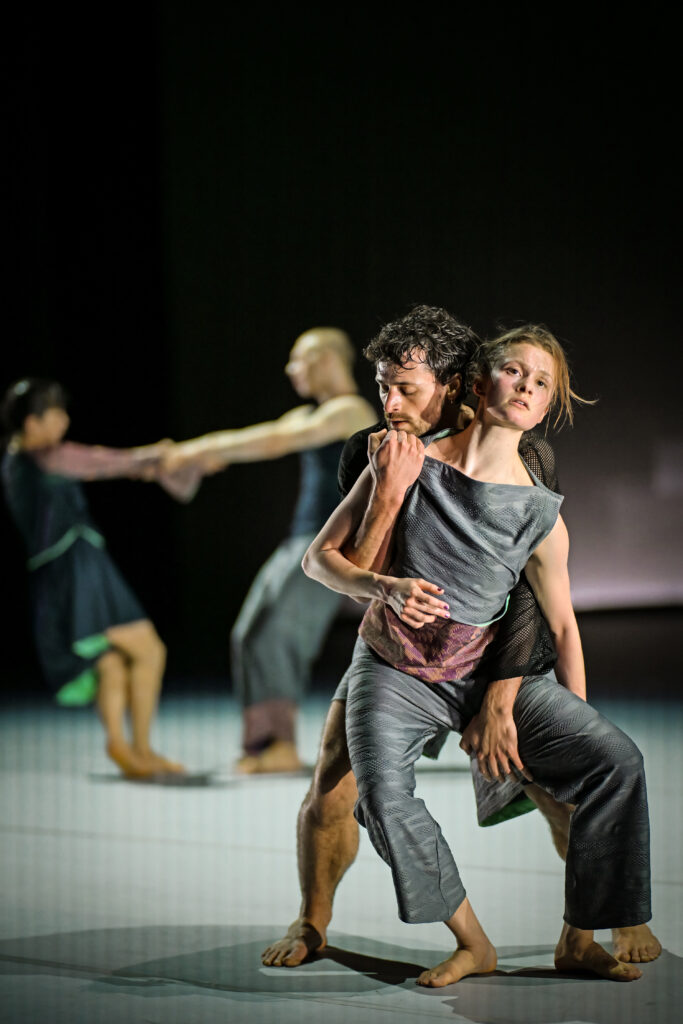
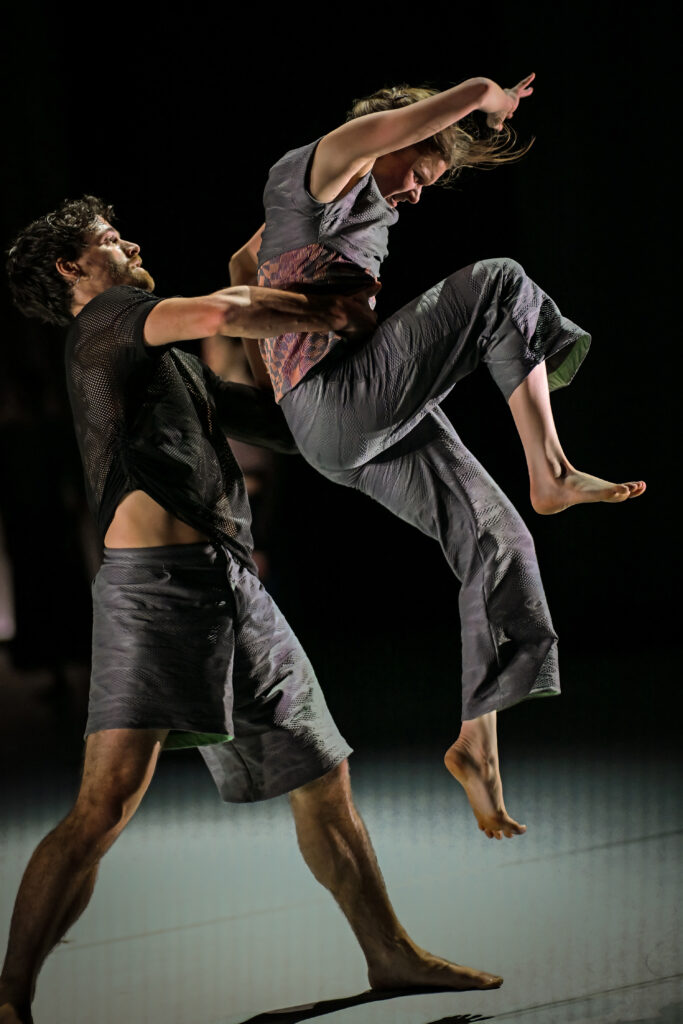
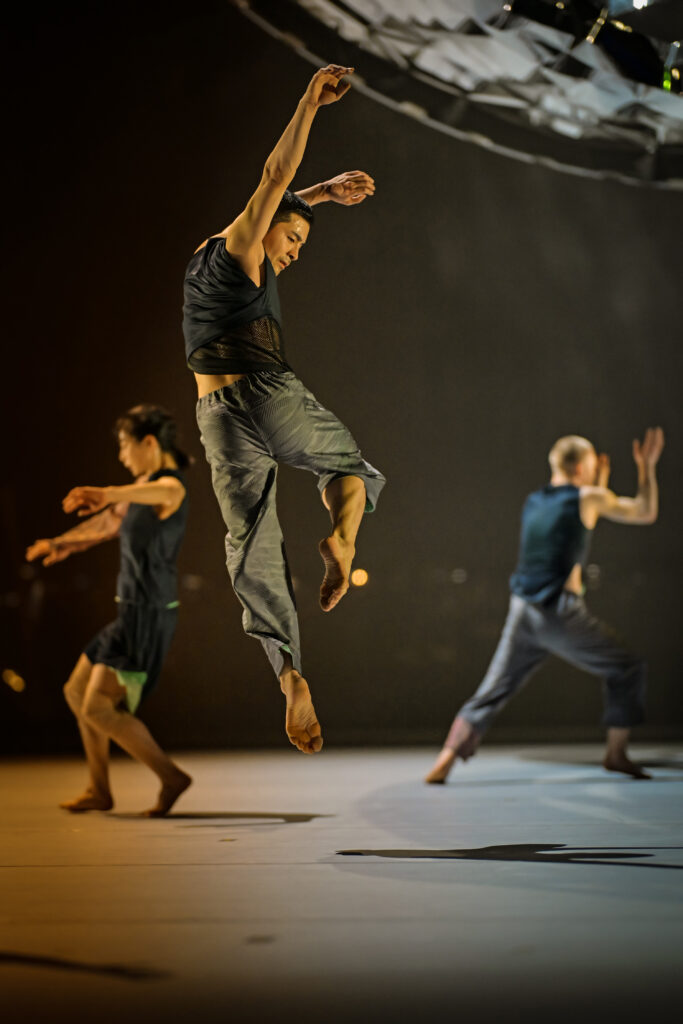
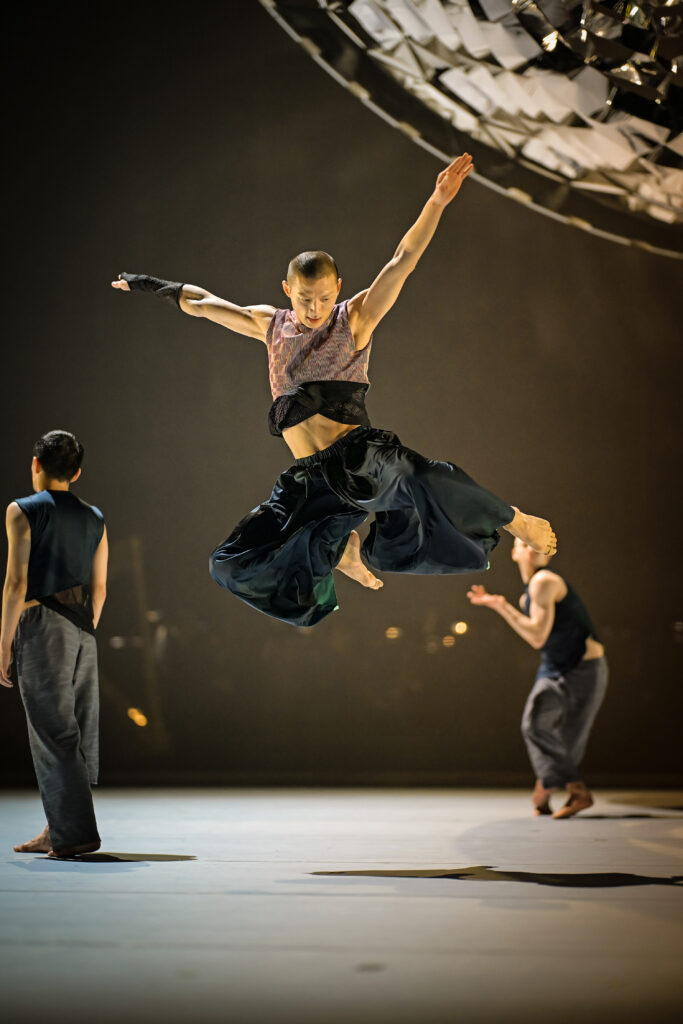
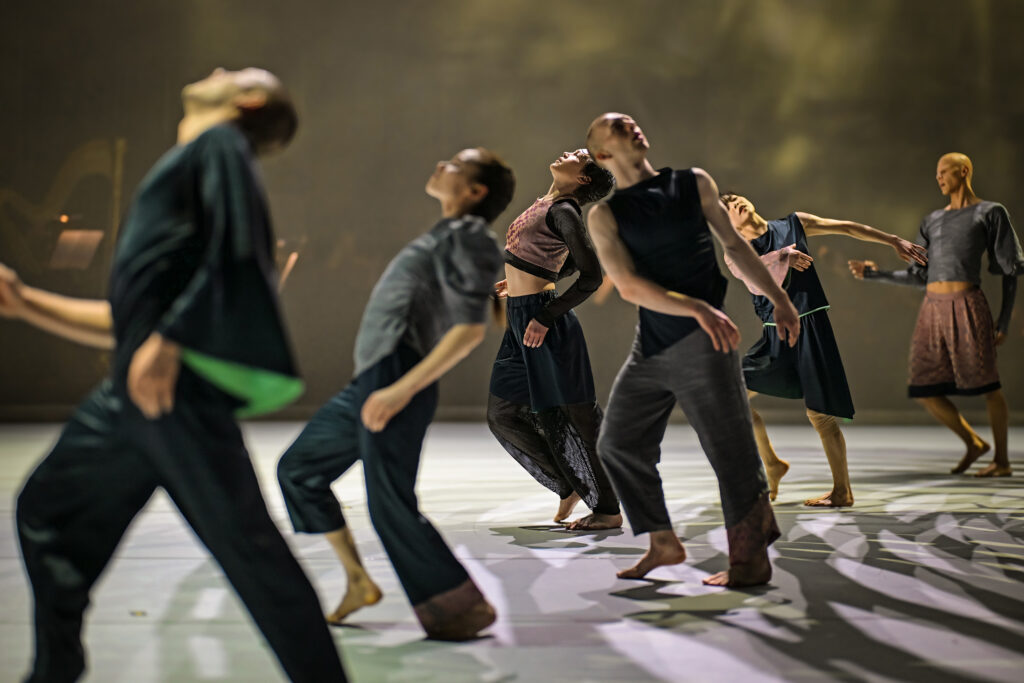
A prologue by sound designer Fanny Thollot first prepares the audience sensually for the upcoming sonic journey. Then the music unfolds: wave-like movements, dramatic climaxes, quiet passages—and LEE\VAKULYA transfer all of this onto the bodies of the twelve dancers. The choreography follows the principle of recurrence: movements emerge, dissolve, and reappear in altered form. Gentle, flowing sequences contrast with powerful, tension-filled moments. Solos merge with group formations, so that the dancers shift between individuality and collectivity—a reflection of the dynamics of proximity, dependency, and change. The bodies appear like living components of the stage space, which itself is set in motion. In this way, an overall composition emerges in which dance, music, and space merge into one.
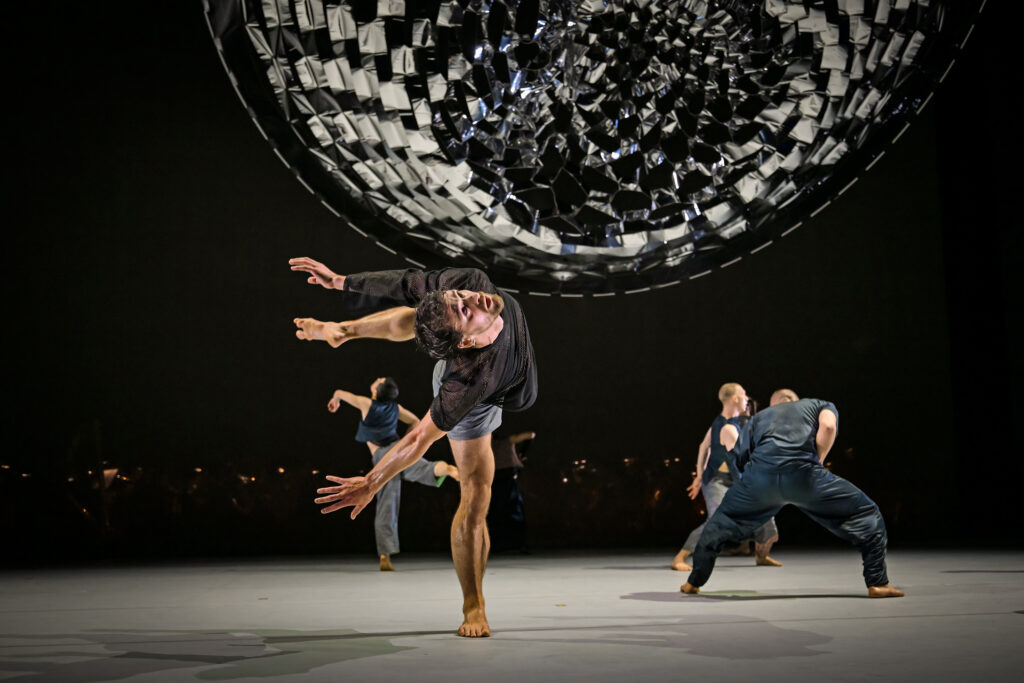
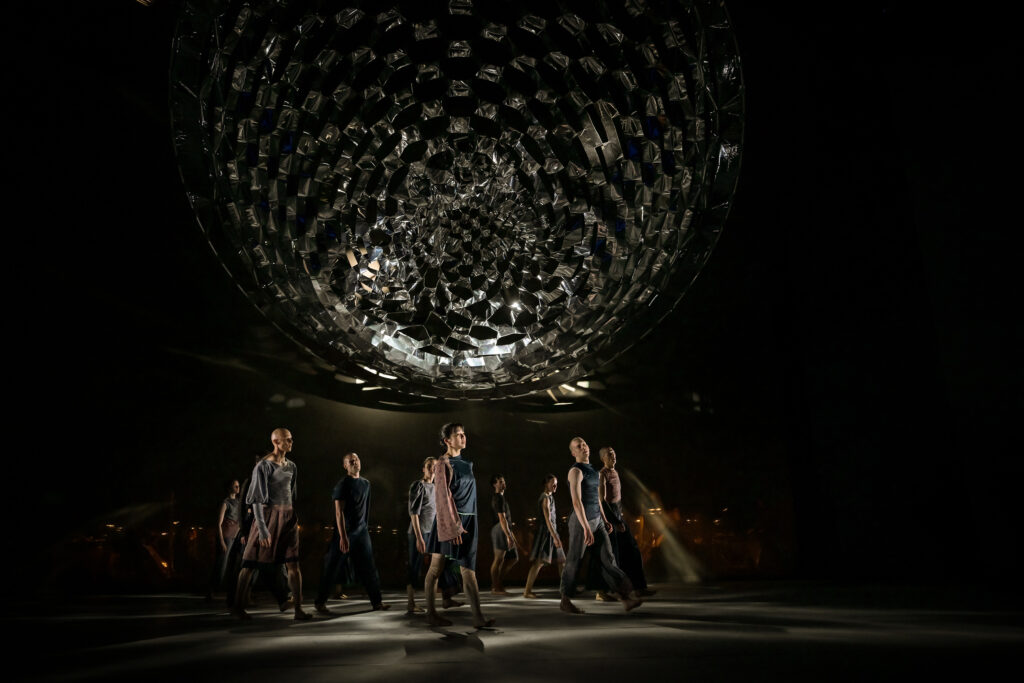
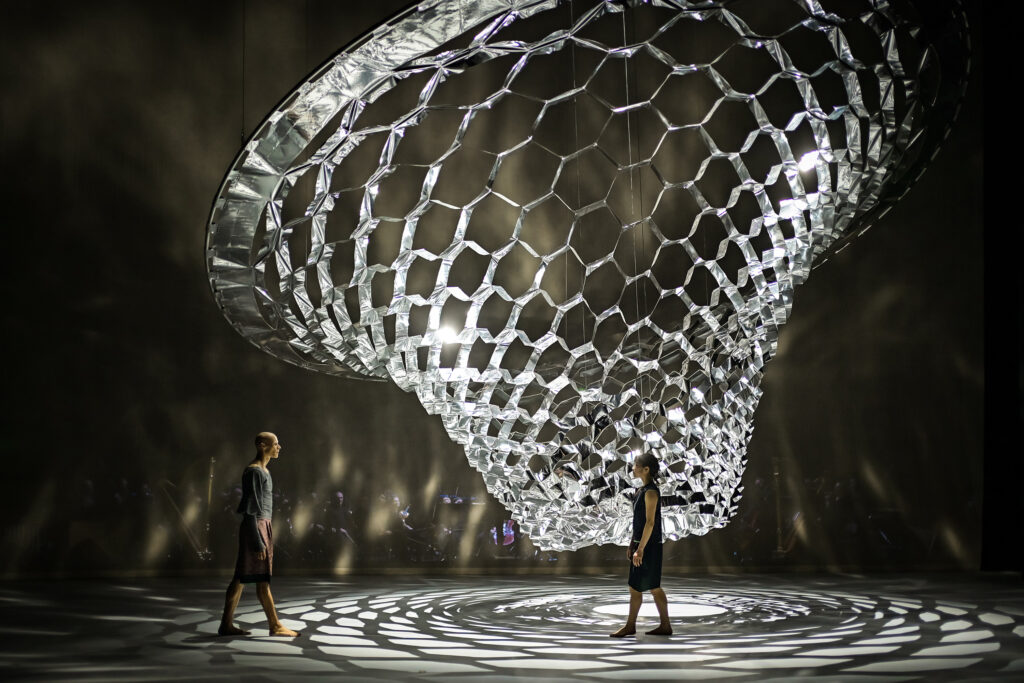
The stage design by Yoko Seyama is flexible and dynamic: instead of fixed scenery, the Japanese artist creates a large, mobile installation made of lightweight materials that generates moments of interaction with the dancers. It rises slowly, evoking currents, waves, and the ocean’s continual motion. The lighting design by Taiwanese artist Joanne Shyue reinforces this effect: moving reflections of light recall sunlight beneath the water. The stage appears fluid and open; the boundaries between space, dancers, and audience dissolve. The orchestral musicians are placed visibly onstage, so that acoustic and physical layers merge into a unity through the live performance.
The costumes by Berlin-based Taiwanese designer Damur Huang convey the qualities of water in form, structure, and material. Each costume is unique, reflecting the individual characteristics of the dancers, supporting the circular and flowing movements, and intensifying the physical experience of the choreography.
In Become Ocean, LEE\VAKULYA show that dance does not merely illustrate music, but creates an independent dimension of rhythm, space, and volume. The stage becomes an organic, breathing body in constant motion. Bodies, light, stage, and sound merge into a whole—a poetic allegory of nature, its beauty, its violence, and the unstoppable circularity of life. Like the ocean itself, the work takes the audience on a journey between harmony and dissonance, between inner stillness and powerful dynamics—a sensory immersion in sound, movement, and space.
by Lucas Herrmann
Biographies
LEE\VAKULYA
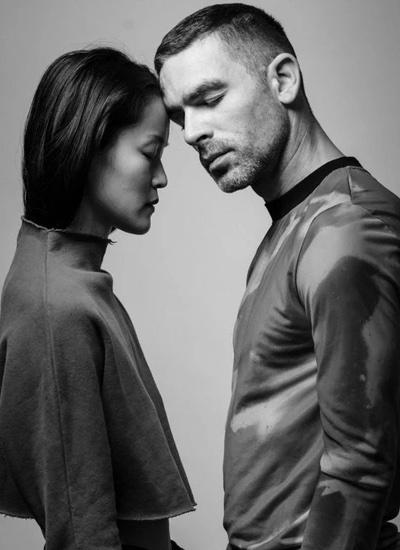
LEE\VAKULYA are the Taiwanese dancer and choreographer Chen-Wei Lee and the Hungarian dancer and choreographer Zoltán Vakulya. Based in Brussels, the duo has been collaborating since 2016 on stage productions, exhibitions, and performances, and is considered one of the emerging voices in the contemporary dance scene. Lee has danced with many renowned companies, including Peeping Tom, GöteborgsOperans Danskompani, Tanztheater Wuppertal Pina Bausch, and from 2009 to 2014 with the Batsheva Dance Company. Vakulya, alongside his work as a freelance choreographer, has collaborated with a wide range of artists such as HODWORKS, Mal Pelo, Wim Vandekeybus, David Zambrano, Albert Quesada, and Vera Tussing. The work of LEE\VAKULYA is characterized by a fluid yet precise physical approach that challenges the boundaries of the body and often interweaves different compositional strategies in their stage productions. As guest performances with the Hessisches Staatsballett, their acclaimed duet Together Alone was presented in Darmstadt in 2022, followed in 2023 by the German premiere of Burnt [the eternal long now] in Wiesbaden as part of the Tanzfestival Rhein-Main. Both choreographers have received multiple awards for their work, including the Jeon Mak Arts Award 2017 (South Korea), the TECO Award for the Art of Dance 2020 (Taiwan), and the Taishin Performing Arts Award 2023 (Taiwan).
Yoko Seyama
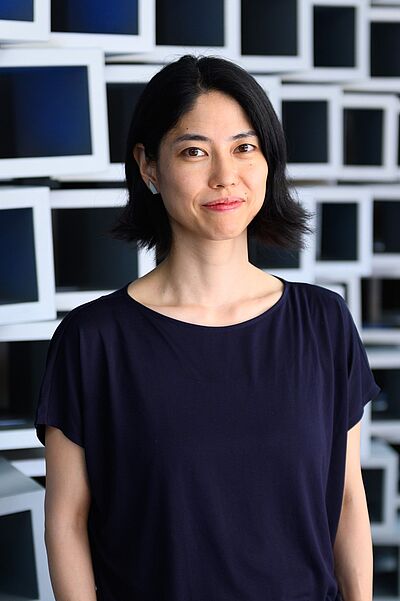
The Berlin-based Japanese scenographer and multimedia artist Yoko Seyama specializes in art in relation to time and space and comes from backgrounds in architecture and dance. In her works, she combines digital elements with natural materials, transforming them into ever-changing spaces in public areas, theaters, museums, and galleries. For the performing arts, she has created her distinctive stage designs for dance, ballet, musicals, opera, and concerts in collaboration with numerous partners, including Mémoires d’Oubliettes with Jiří Kylián at Nederlands Dans Theater (NDT), the GRAND SHOW 23 at Berlin’s Friedrichstadt-Palast with Staatsballett Berlin, The Nutcracker with Leipzig Ballet, Die Fledermaus with Giorgio Madia at the Grand Theatre Łódź, Cinderella with Raimondo Rebeck at Astana Opera, Miss Saigon and The Circus Princess at the Theatre of Musical Comedy St. Petersburg, as well as projects with the National Dance Company Wales (UK) with Fernando Melo, Les Grands Ballets Canadiens de Montréal, Compañía Nacional de Danza, and New National Ballet of Japan. She contributed to the opening ceremony of EXPO 2025 in Osaka, Japan, and in 2023/24 worked on the Naniwa Danshi Concert with Takeatsu Nashimoto. Her installations have been exhibited worldwide at the Center for International Light Art (Germany), Borås Art Museum (Sweden), Museo della Luce (Rome), Wood Street Galleries (Pittsburgh), Sonic Acts XIII (Netherlands), Echigo-Tsumari Art Triennale (Japan), Bangkok Citycity Gallery, MAIIAM (Thailand), and many other venues. She holds an MA in Art Science from the Royal Academy of Art in The Hague and a BA in Architecture from Musashino Art University in Tokyo. She received a scholarship from the Pola Art Foundation (Japan), a Lighting Design Award 2023, and a nomination for the 22nd Hong Kong Dance Awards.
Joanne Shyue
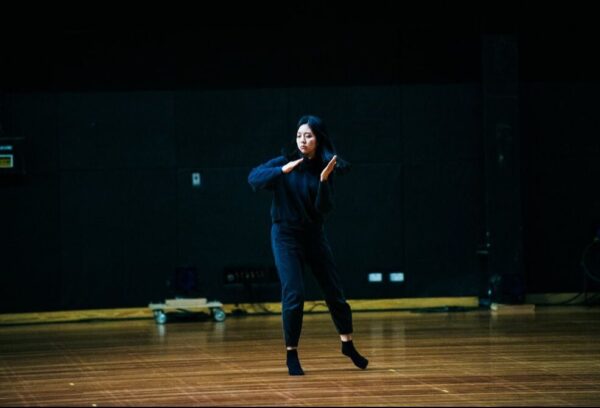
Joanne Shyue is a lighting designer and artist working across theatre, concerts, exhibitions, installations, film, and live events. With an M.F.A. in Lighting Design from the Taipei National University of the Arts, she positions light not only as a technical craft but as an artistic language with the capacity to reframe perception and provoke thought.Her practice extends beyond conventional design: Joanne has appeared on stage herself, merging improvisational dance with live lighting to test the boundaries between performer and designer, presence and illumination. This allows her to approach light as an active agent rather than a background element.For Joanne, light is never neutral. It is a force that shapes spaces, alters behaviours, and reveals or conceals layers of reality. She treats each project as an experiment in how light interacts with human experience, refusing to reduce it to decoration or function alone. Her ongoing pursuit is to discover how light might not only transform environments but also invite audiences to reconsider their own relationship with society and with one another.
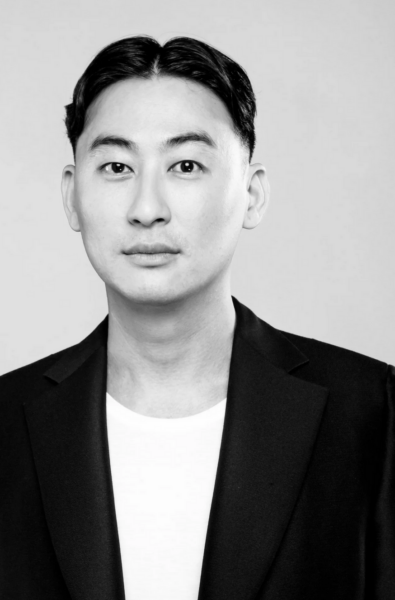
Damur Huang
Raised in Taipei, Taiwan, Huang discovered his passion for fashion at an early age—an influence that explains the strong presence of Asian pop culture in his designs. He studied textiles and clothing at Fu Jen Catholic University before moving to Europe to continue his education at the Royal Academy of Fine Arts in Antwerp and La Cambre-Mode[s] in Brussels, where he specialized in fashion design. In 2015, Huang founded the Berlin-based label #DAMUR, drawing inspiration from the dynamic energy of Asian pop culture and the experimental spirit of Berlin. He excels at deconstructing the core elements of Berlin culture and transforming them into eccentric yet effortlessly wearable collections. Huang is currently presenting his 13th collection and has been honored with the Young Talents Award.
A conversation with Chen-Wei Lee and Zoltán Vakulya
Focus Changes Perception
A conversation with Chen-Wei Lee and Zoltán Vakulya
What choreographic approach do you take to the music of John Luther Adams?
The music emerges from deep within and transfers to the body, like something streaming outward from its core in all directions. When we think of musicality in dance, it is often a landscape. Become Ocean is not a landscape that immediately reveals itself. The intuitive response would be to float, to rise and fall. For us, however, it primarily conveys a sense of pulsation directly connected to movement — bodies individually and as one large entity, dissolving into small particles or breathing together like a powerful lung. The audible experience, combined with our visual imagination, strongly shapes the choreography: how we use space, how each dancer employs their body. We always tell them: open and close. The music carries such openness, yet as soon as an instrument steps forward, you automatically zoom in.
How do dance and music relate to one another?
We work with a central chord of chaos and order. In the prologue by Fanny Thollot, we establish an order to “calm” the audience and the dance — as preparation for the orchestral work. Become Ocean is like a great feast, but once order is established, we have material to break it apart again. The chaos also arises because we hear it in the music. One might think there is no order, yet the composition has a clear structure: every seven minutes there are upward and downward movements. After the halfway point, everything reverses. We do not follow this pattern exactly, but we draw inspiration from it. The choreography engages with the idea of unity while continually disrupting it. There are passages in which we merge harmoniously with the music — the dance surfing on a wave. At the same time, we deliberately seek moments when the bodies dive into the music: deeply intimate solos or the group body reflecting the monumental scale of the acoustic experience.
What experience does the space provide for the overall composition?
Yoko Seyama’s spatial design becomes part of the overall movement. Interior and exterior perspectives merge. At the same time, we find ourselves in the midst of the action. Sound and movement are already closely connected simply because the orchestra is on stage. Above everything, the object shines. We describe the overall image as a wandering cloud — visible yet fleeting. From apparent chaos, ordered patterns emerge. We play with the idea of coming and going, working with proximity and distance, like gazing at the sky or the ocean: the vastness remains, but focus changes perception. Joanne Shyue’s lighting design becomes a mediating element. It creates its own layer of movement, opens and closes spaces, generates depth, and directs the gaze. In this way, an interplay of sound, body, and movement unfolds, producing contemplative images — open enough to be filled with the audience’s own associations.
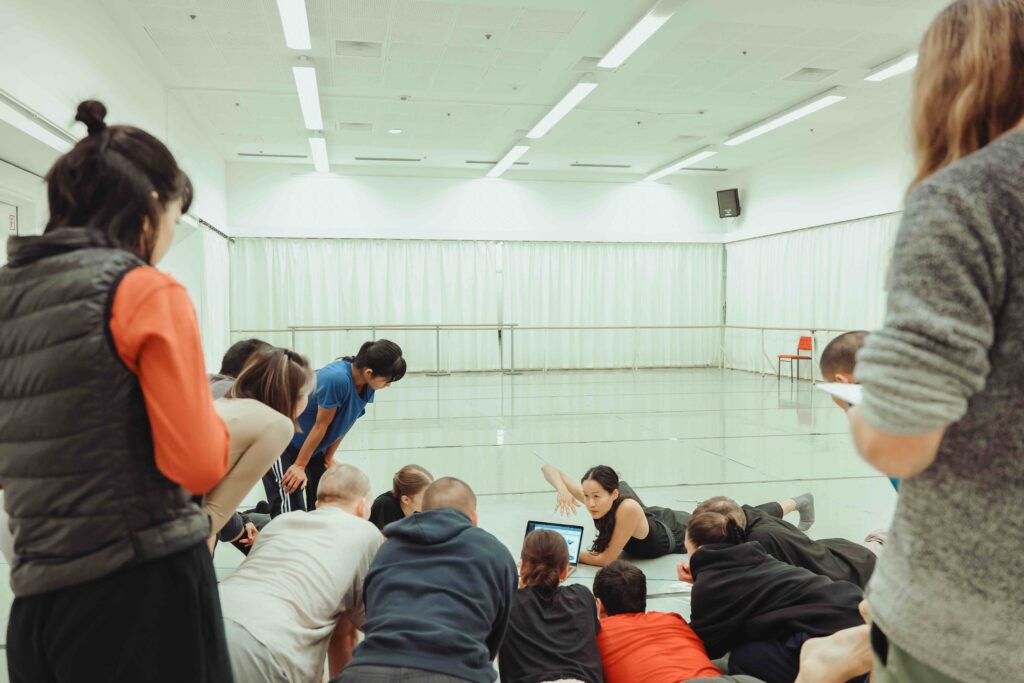
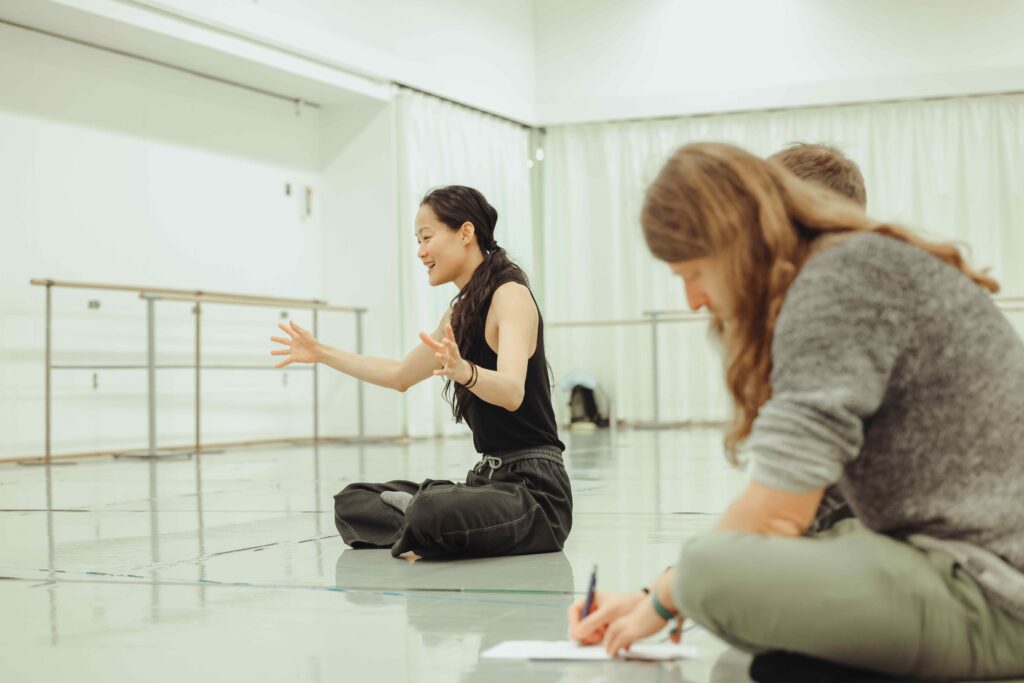
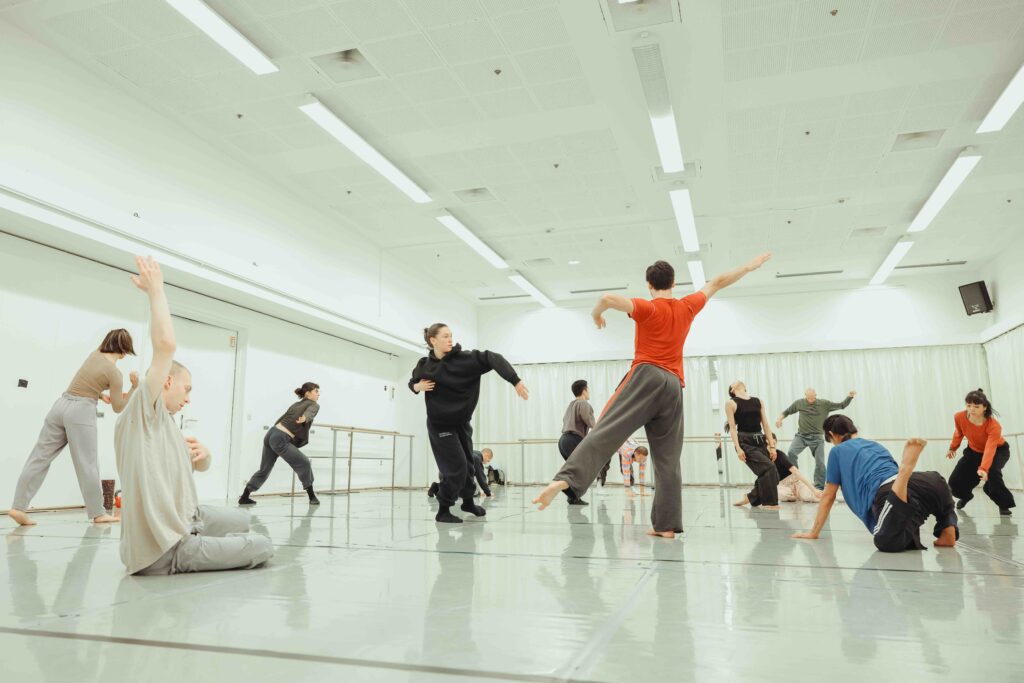
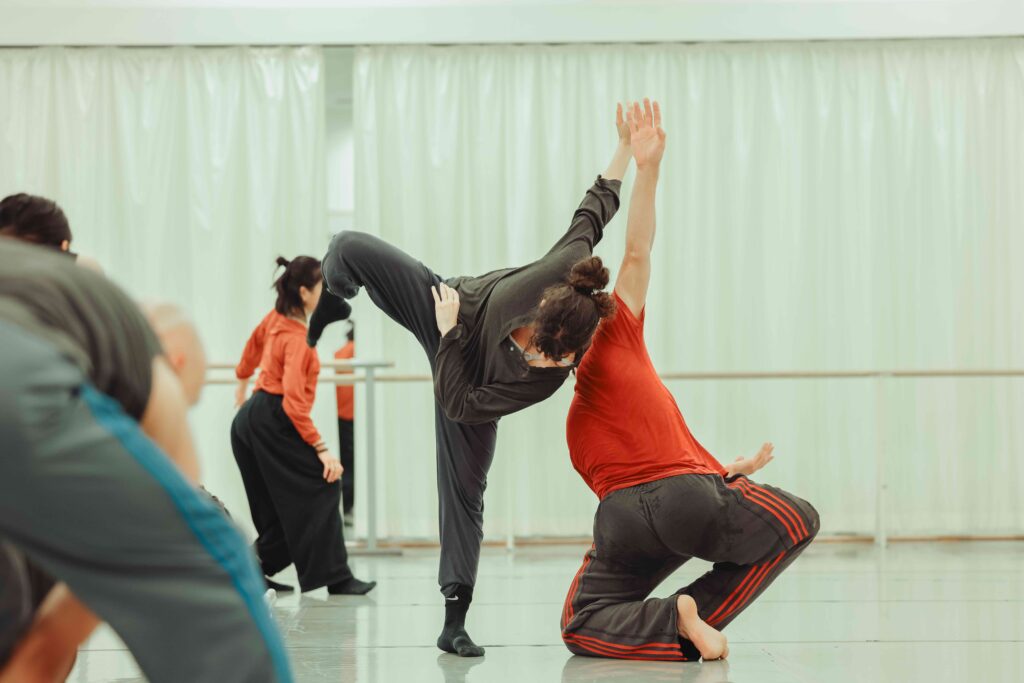
Behind the scenes