Digital program booklet “Cantos”
Deus ex musica
Dramaturg’s note written by Lucas Herrmann
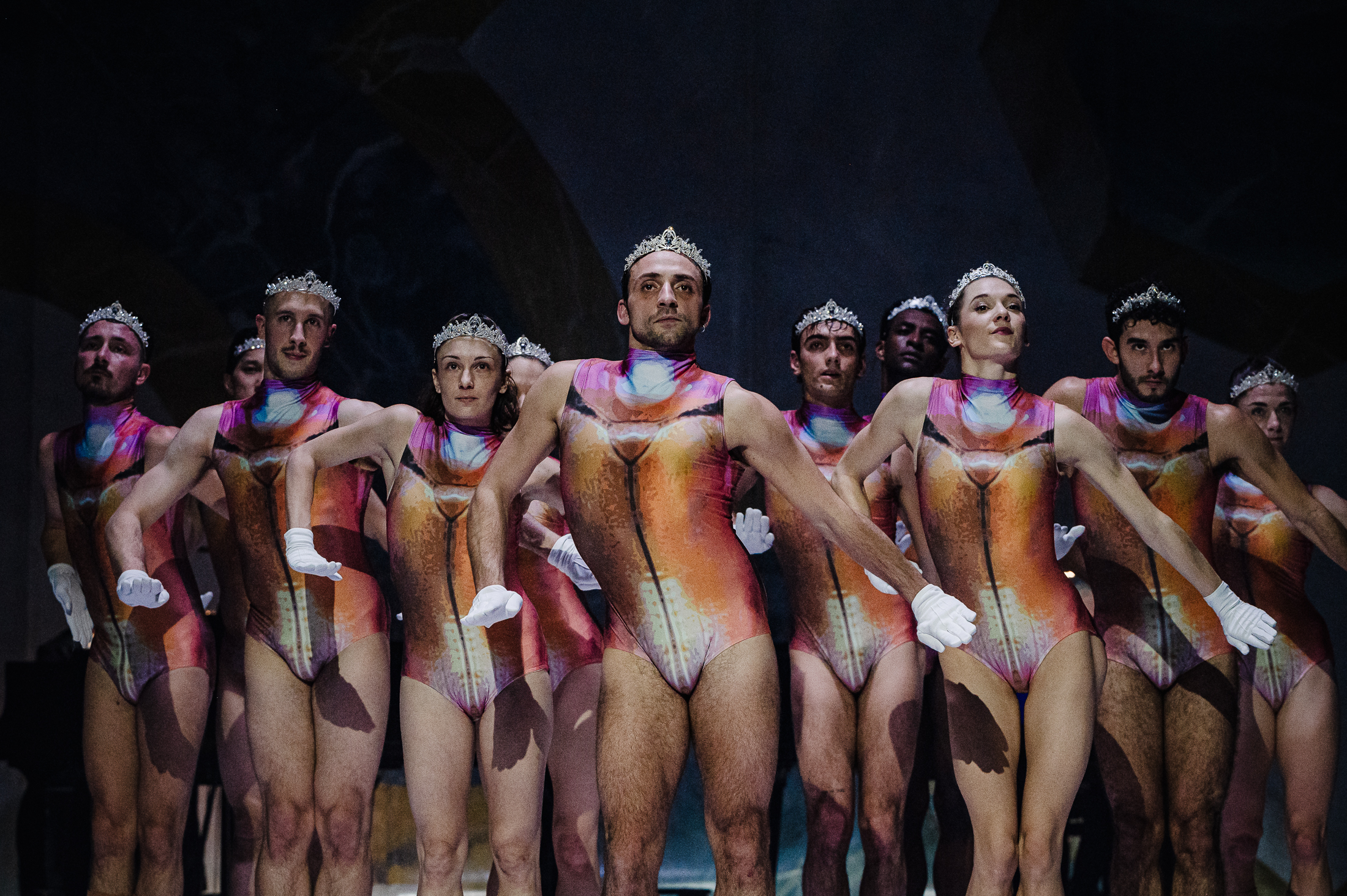
Cantos by the internationally acclaimed Polish choreographer Maciej Kuźmiński is a contemporary dance piece that explores the absurdities and multifaceted nature of human existence.
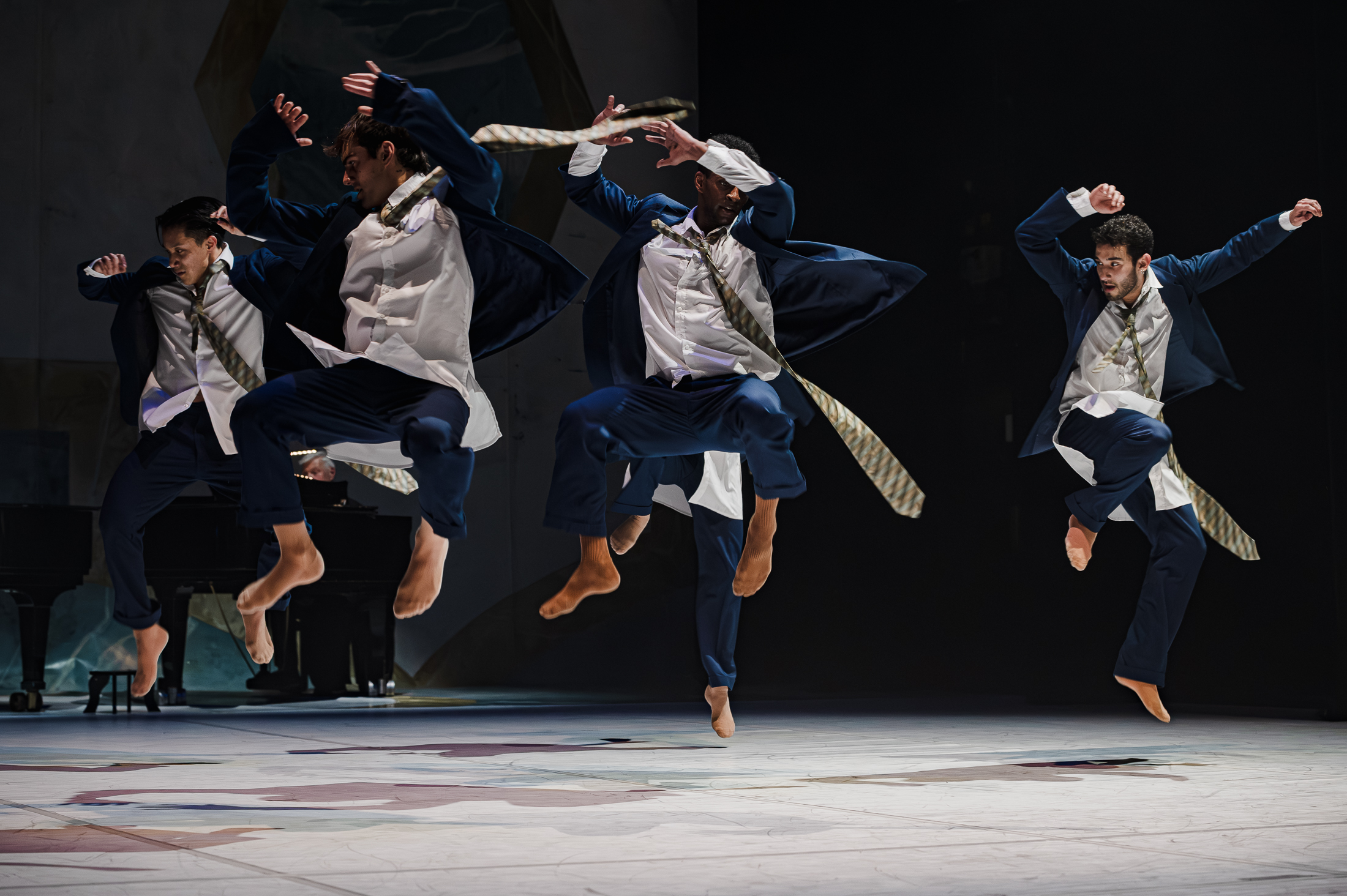
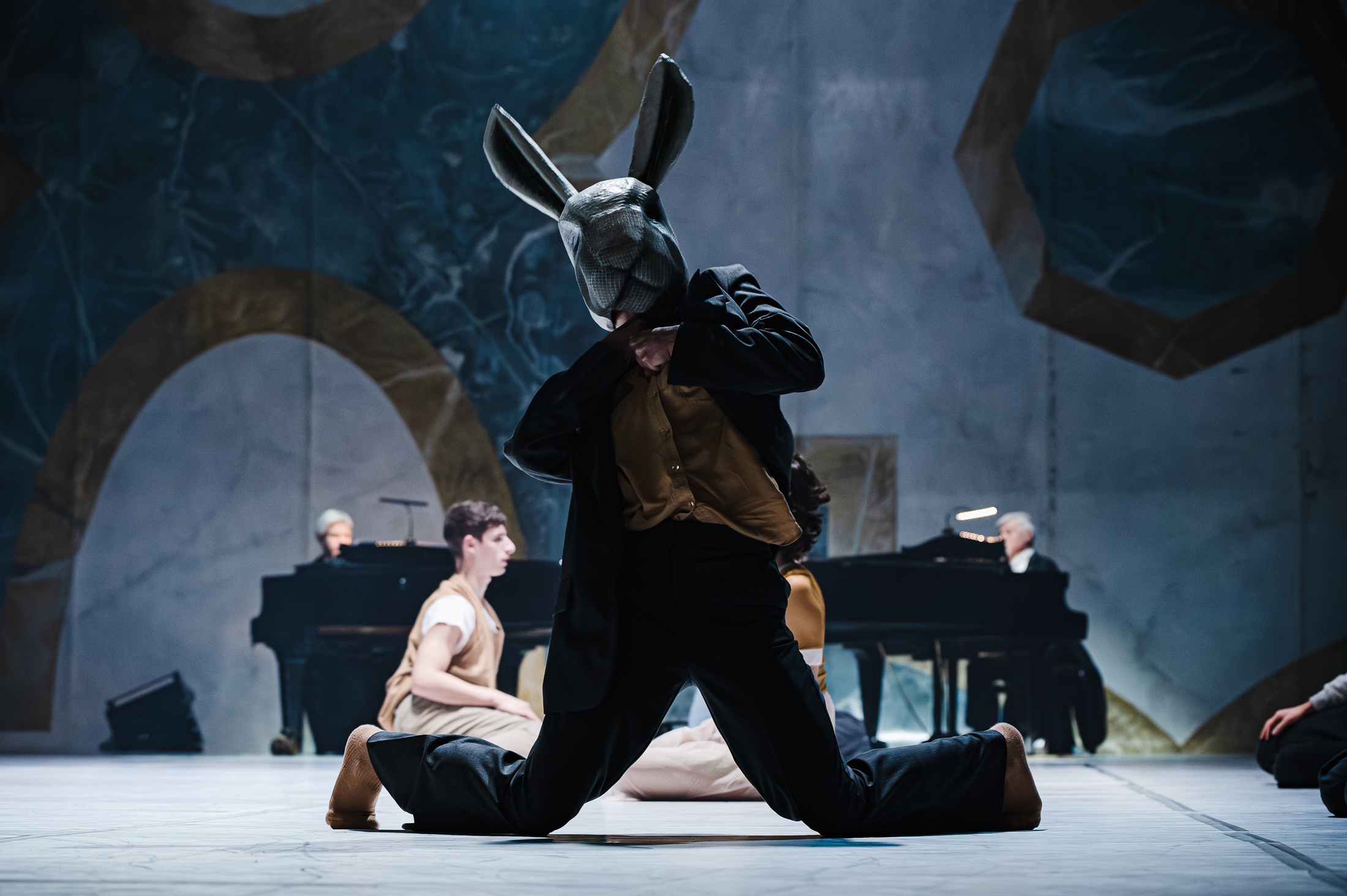
The musical foundation of the work is Canto Ostinato (“obstinate song”) by the Dutch composer Simeon ten Holt. Composed between 1976 and 1979, it is considered a masterpiece of musical minimalism, characterized by repeating patterns, slow developments and hypnotic structures. Canto Ostinato is often regarded as one of the most influential compositions of 20th-century minimal music and has inspired artists from a wide range of genres with its unique form. The piece can be performed with anywhere from two to twelve instruments, and its duration varies depending on the performance. Although the music initially appears calm and pared-down, it unfolds a strong emotional impact that can sound both meditative and relentless. In Cantos, two pianists perform live on stage and are integrated into the staging, creating an immediate exchange between sound and movement.
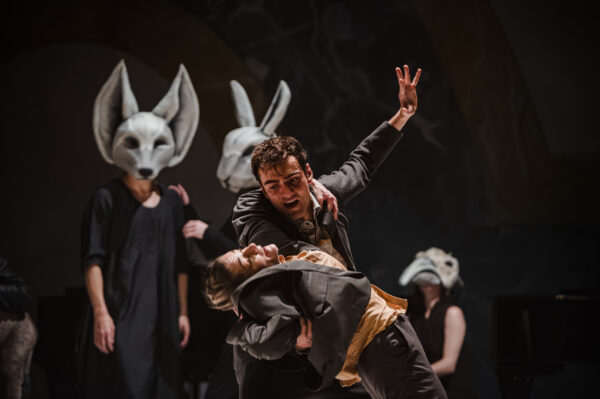
The dancers appear like game pieces controlled by a superior musical machinist whose play—once set in motion—drives the course of events. One might speak of a “Deus ex musica,” which—by analogy with the Latin term Deus ex machina from ancient tragedy, denoting the appearance of a deity through stage machinery—describes the emergence of a divine force by means of the music itself. This evokes associations of divine intervention, a higher concept of fate or other external influences on human destiny. At the same time, the formalistic action reveals the inner drive embedded in humans as part of creation—an impulse that, in the sense of the élan vital (“vital impetus”) of French philosopher Henri Bergson, underlies all living beings and things.
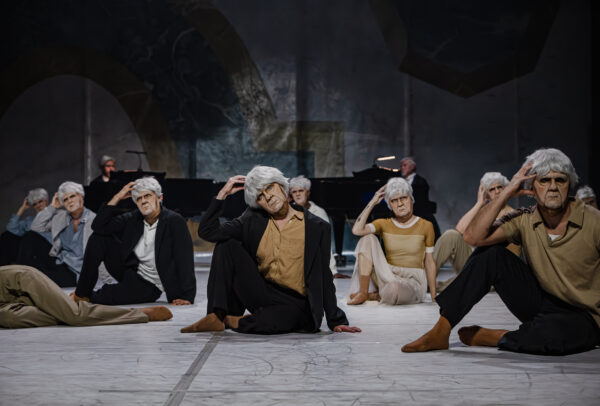
Another central theme of the piece is human folly, inspired by Francisco de Goya’s enigmatic etching series Los Proverbios (“The Proverbs”) and Los Disparates (“The Follies”). Created between 1815 and 1823, these works are considered artistic precursors to Surrealism and address themes such as power, religion, violence and human error—often through grotesque, absurd and irrational scenes filled with distorted figures, masks and uncanny imagery. Cantos develops from this a wholly new stage language. There is no linear narrative; instead, it presents a tableau-like sequence of atmospheric scenes in which movement, music and costumes are woven together in an emotionally resonant way.
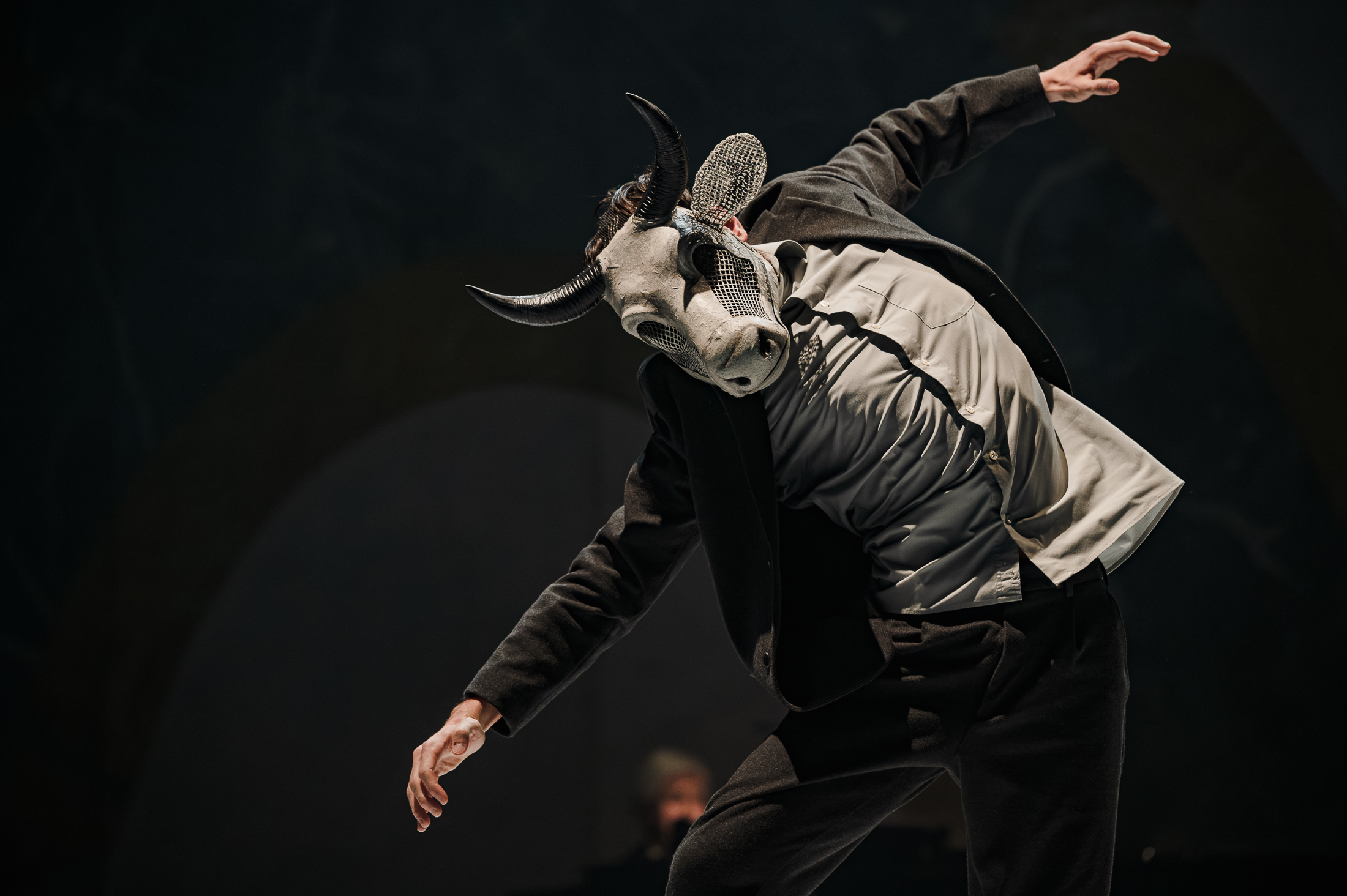
The stage space is populated by figures that contain both human and animalistic or fantastical elements. Gabriela Neubauer’s stage and costume design uses archetypal images that make inner states and emotional extremes visible. A key theme of the production is the instinct-driven, animalistic side of human beings. In Goya’s images, humans repeatedly appear with animal traits or behaving like animals. This idea is carried forward in Cantos: masks, distortions and animal-like movement vocabularies reveal how close humans still are to their primal instincts. The stage becomes a place where the inner self is turned outward—a hall of mirrors reflecting the abysses and longings of the human soul.
In its grotesque and dance-theatrical form, Cantos also serves—within the conceptual development of Maciej Kuźmiński and his dramaturg Paul Bargetto—as a commentary on the current global situation, which, marked by wars, the rush of an increasingly technology-driven everyday life or the return of autocratic systems, seems more and more like a madhouse. Yet in the end, perhaps the world has not changed all that much, and human folly appears as a perpetual revenant of human existence throughout all times and epochs.
In conversation with Maciej Kuźmiński
The music devours you alive
How would you describe the world of Cantos, and which themes does the piece address?
The world of Cantos is a music box: driven by external forces, it keeps spinning endlessly—through the mechanisms of civilization, human DNA, and animal instincts—creating an accelerated, dynamic reality. The piece engages with three philosophical approaches: the élan vital according to Henri Bergson, which describes the complexity of the world and nature as constant movement shaped by the interplay between chaos and structure; Friedrich Nietzsche’s concept of the eternal recurrence, which reflects recurring patterns in personal life and urges us to embrace the inevitable; and a notion of fate expressed in the wheel of history, in which humans experience themselves as part of cyclical processes that also imply a form of disempowerment.
You choreograph to the music Canto Ostinato by Simeon ten Holt. How does it relate to the dance?
This masterful music is so complex and rich that it practically devours you—it eats you alive. It frames the choreography of the bodies, defining their dynamics, the momentum of the staging, and its color. It is chaotic and yet structured. The élan vital is especially present here: for me, the music symbolizes this vital force. Dance and music exist on the same level. Working with the dancers opens up a multitude of movement vocabularies—a kaleidoscope. Much arises directly from the material that emerges: scores, formations, and fragmented, multidimensional processes. At the same time, the work involves operating on the smallest scale of choreographic structures—finding the maximum within the minimum.
How would you describe your role as a choreographer in the creative process?
As a choreographer, I build a creative network with the artists I work with—and place myself at its center. I see myself as the focal point of this structure. Impulses come from many directions, and adjustments to my own ideas arise through feedback. I give everyone creative space and the opportunity to contribute, and I listen to their input—from the dancers, the team, especially my dramaturg Paul Bargetto and the designer Gabriela Neubauer, as well as from others who accompany the creative process. What is crucial, however, is that everything must pass through an inner filter in order to remain true to one’s own voice. Until now, I have always tried to create a new, original work—different from all previous ones. It is about avoiding repetition and creating an entirely unique world through movement—both dramaturgically and aesthetically. But this is only possible when you have a committed and supportive team, and working with such a team here in Wiesbaden has been a great honor for me.
Biographies
Maciej Kuźmiński
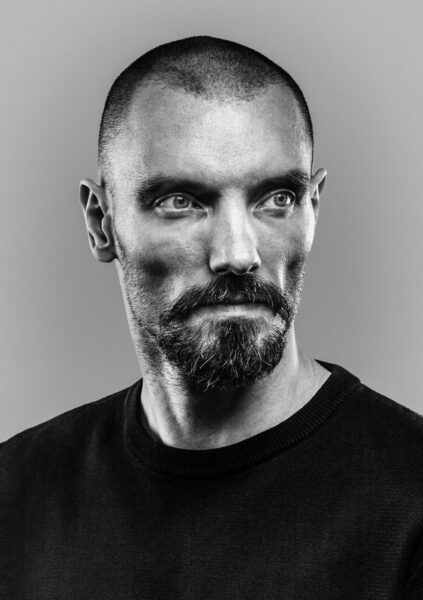
Born in 1985 in Poland, Maciej Kuźmiński witnessed two significant transformations: the global shift from the analog to the digital world and Poland’s transition from a communist to a democratic state. As a “child of a changing world,” Kuźmiński explores in his choreographic work themes such as fluid identity, the absolute in spirituality, and the human need for belonging. His deeply existential and philosophical works are considered a contemporary continuation of the Polish tradition of dramatic theater.
With over 30 international awards, Kuźmiński’s independent productions form the repertoire of the Maciej Kuźmiński Company. As a guest choreographer, he has created evening-length works for renowned companies such as the Staatstheater Kassel, Polish Dance Theatre, and Landestheater Linz, as well as numerous shorter pieces for companies including Scapino Ballet Rotterdam and Theater Osnabrück. Since 2014, he has toured 23 countries, earning recognition for his clear, powerful, and dynamic movement vocabulary.
Since 2009, Kuźmiński has developed the Dynamic Phrasing method—a unique concept for movement and composition. It fosters a kind of “gentle force” derived from gravity and expands dancers’ embodied knowledge into a dynamic movement spectrum. The method is taught at institutions such as Codarts, ArtEZ, and PERA GAU, at festivals like b12, and for companies worldwide. In 2022, an international certification program for Dynamic Phrasing instructors was launched. Kuźmiński currently lives in Rotterdam and is known as the first Polish-born graduate of Trinity Laban (London) and as the founder and director of the first Polish Dance Network.
Gabriela Neubauer
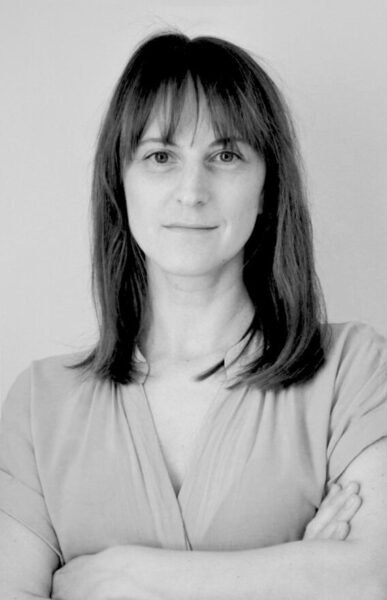
Born in Vienna, Gabriela Neubauer studied scenography at the Academy of Fine Arts Vienna under Erich Wonder. She assisted at the Burgtheater Vienna, among others with Christoph Schlingensief, the Münchner Kammerspiele, and Theater Neumarkt in Zurich. Since 2011, she has worked as a freelance set and costume designer. Her early works were created at Theater Neumarkt in collaboration with Anna Papst, Jens Rachut, and Robert Gerloff. She then began a continuous collaboration with Robert Gerloff at Schauspielhaus Basel, Theater Bonn, Stadttheater Klagenfurt, Volkstheater Wien, and Düsseldorfer Schauspielhaus.
Together with Eva Lange, she created productions at Schauspielhaus Chemnitz, Landesbühne Niedersachsen Nord, Staatstheater Kassel, and Hessisches Landestheater Marburg. With Dominik von Gunthen, she worked at Theater Biel/Solothurn and Pfalztheater Kaiserslautern. With Elena Hackbarth, she developed numerous productions at junges Theater Regensburg. Other credits include productions at Staatstheater Braunschweig, Stadttheater Bremerhaven, E.T.A. Hoffmann Theater Bamberg, Theater Phönix Linz, and with Sophie Killer at Theater Paderborn.
In the field of dance, she has collaborated with Maciej Kuźmiński at Landestheater Linz, with choreographers Anat Oz and Kristel van Issum, with Noa Zuk and Ohad Fishof at Staatstheater Kassel, as well as with Eva-Maria Schaller at the Tanzquartier Wien. Neubauer lives and works in Linz.
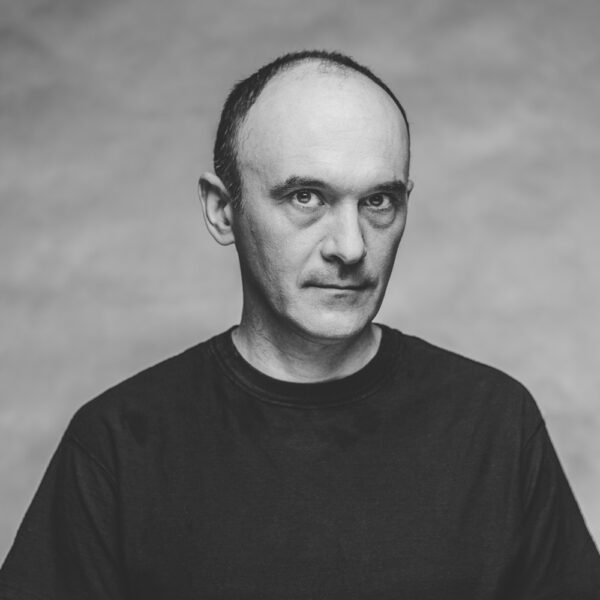
Paul Bargetto
Paul Bargetto (born 1969, San Jose, United States) is an international theater director, dramaturg, festival producer, teacher, and arts activist based in Warsaw, Poland. He is the President and Founder of Fundacja Teatru Trans-Atlantyk, an NGO dedicated to producing live and digital arts through two initiatives: Teatr Trans-Atlantyk, a documentary theater ensemble, and Eldorado Teatr, a digital live arts platform. Bargetto also collaborates on projects outside of these organizations, particularly in the field of dance, and his work has been presented across Europe including Poland, Germany, Romania, United Kingdom, Netherlands, Austria, Belgium, France, Turkey, Lithuania, as well as numerous productions in the United States.
Before moving to Europe, Bargetto lived and worked in New York City, where he founded the theater company East River Commedia (1998-2010). Important productions with East River Commedia include Striptease and Out at Sea, Philosopher Fox and Serenade, The Magnificent Cuckold, and A Couple of Poor, Polish-Speaking Romanians. He also founded and directed the undergroundzero festival (2007-2014), a festival of experimental independent live arts presented in six incarnations at various venues throughout the East Village and Lower East Side, including PS 122, Collective:Unconscious, Clemente Soto Velez, and the Living Theatre. In 2005, Bargetto helped found the League of Independent Theater, an advocacy organization for independent theater in New York City, where he served on the board of directors and as the managing director of public affairs for five years.
Bargetto’s artistic practice demonstrates a commitment to engaging with diverse communities. He has developed projects that specifically address LGBTQ+ representation, exploring queer themes and identities in theater and advocating for diversity and inclusion. Since the beginning of the full scale invasion of Ukraine, he has concentrated on working with Ukrainian theater and dance, as well as numerous humanitarian initiatives. He also creates work that addresses the history and culture of Jewish communities, with a specific focus on the Holocaust and its impact on contemporary society. He is a member of Kultur Liga, a network of Jewish artists in Poland.
Recent directing and dramaturg credits include Album Karla Hockera and California with Teatr Trans-Atlantyk, Plateau, Fabula Rasa, and i, on the Verge of Humanity with choreographer Maciej Kuzminski, and Historie Mowione, a site-specific performative installation in Poznan. Other projects include Alphabet Cities, a multi-year project of arts and advocacy for the LGBTQ community in Poland, and International Agency for Ukraine!, a performative installation with Ukrainian and Polish artists as part of the The_____Dream Festival with the House of Beautiful Business in Sintra, Portugal
Bargetto is currently touring with Every Minute Motherland, a documentary dance piece featuring Ukrainian and Polish dancers and choreographer Maciej Kuźmiński, which addresses the war in Ukraine. In addition to Cantos, he is currently working on If I had a Gun, I’d take them all down, a play by Ukrainian playwright Piotr Armionowski in collaboration with actor Michael Rubenfeld.